The most detailed English language website on the island

Weather - Tutiempo.net
     

After more than 20 years, posts here will now only be occasional (see why) for big events such as Tenerife Carnaval, so please "Like" and follow our Facebook Page to get future updates.

Showing posts with label Burial of the Sardine. Show all posts

Wednesday, 2 March 2022

Why do we bury a sardine on Ash Wednesday to say goodbye to the carnival?

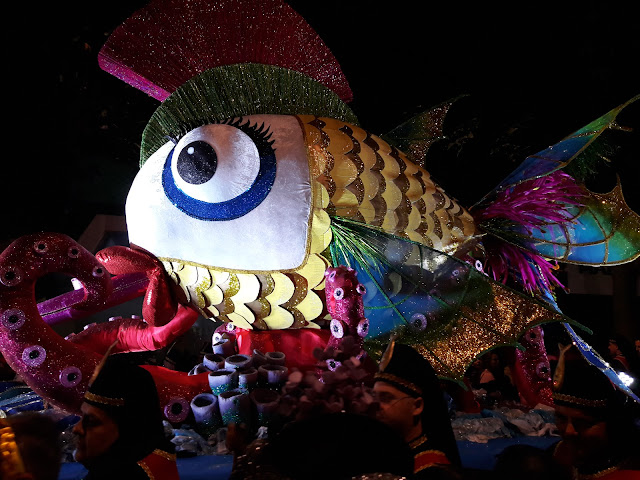
The sardine to be cremated in Santa Cruz de Tenerife in 2019

For several days, costumes, dancing and revelry [usually] flooded the streets of half of Spain. However, on Ash Wednesday everything returns to normal after the Burial of the Sardine. But why do we bury this fish to say goodbye to Carnival?

The Burial of the Sardine consists of a carnival parade that parodies a funeral procession and ends with the burning of a sardine-shaped figure. It's usually celebrated on Ash Wednesday and serves to put an end to the madness of Carnival and usher in the seriousness of Lent. Popularized from the 18th century, as it is such an old tradition, there are various theories about its origin.

According to popular legend, the fault lies with a shipment of sardines in poor condition that arrived at the Madrid markets during the reign of Carlos III (Charles III of Spain). Such was the stench that the king, fearing for the health of his population, ordered the burial of all the rotten sardines on the banks of the Manzanares River. Convinced by this theory, today the Brotherhood of the Burial of the Sardine in Madrid ends its procession at La Fuente de los Pajaritos in the Casa del Campo, as it's said that the sardines were buried there. Other historians, on the other hand, relate the party to Jerónimo Grimaldi, one of the last ministers of Carlos III who was curiously nicknamed "the sardine" because of his extreme thinness. It's said that Grimaldi left the city of Madrid around Lent and the people of Madrid decided to bid him farewell with a great masquerade.

It seems clear that the tradition had its origin in the capital of Spain and spread to other cities in the country and even Latin America. Currently, one of the most massive and famous Burials of the Sardine is the one held in the city of Murcia. However, it has some peculiarities since, for example, it is not used to say goodbye to Carnival but as part of the Spring Festival after Holy Week. 

Wednesday, 6 March 2019

Burial of the Sardine Ash Wednesday 2019

The sardine on the way to its funeral 6 March 2019


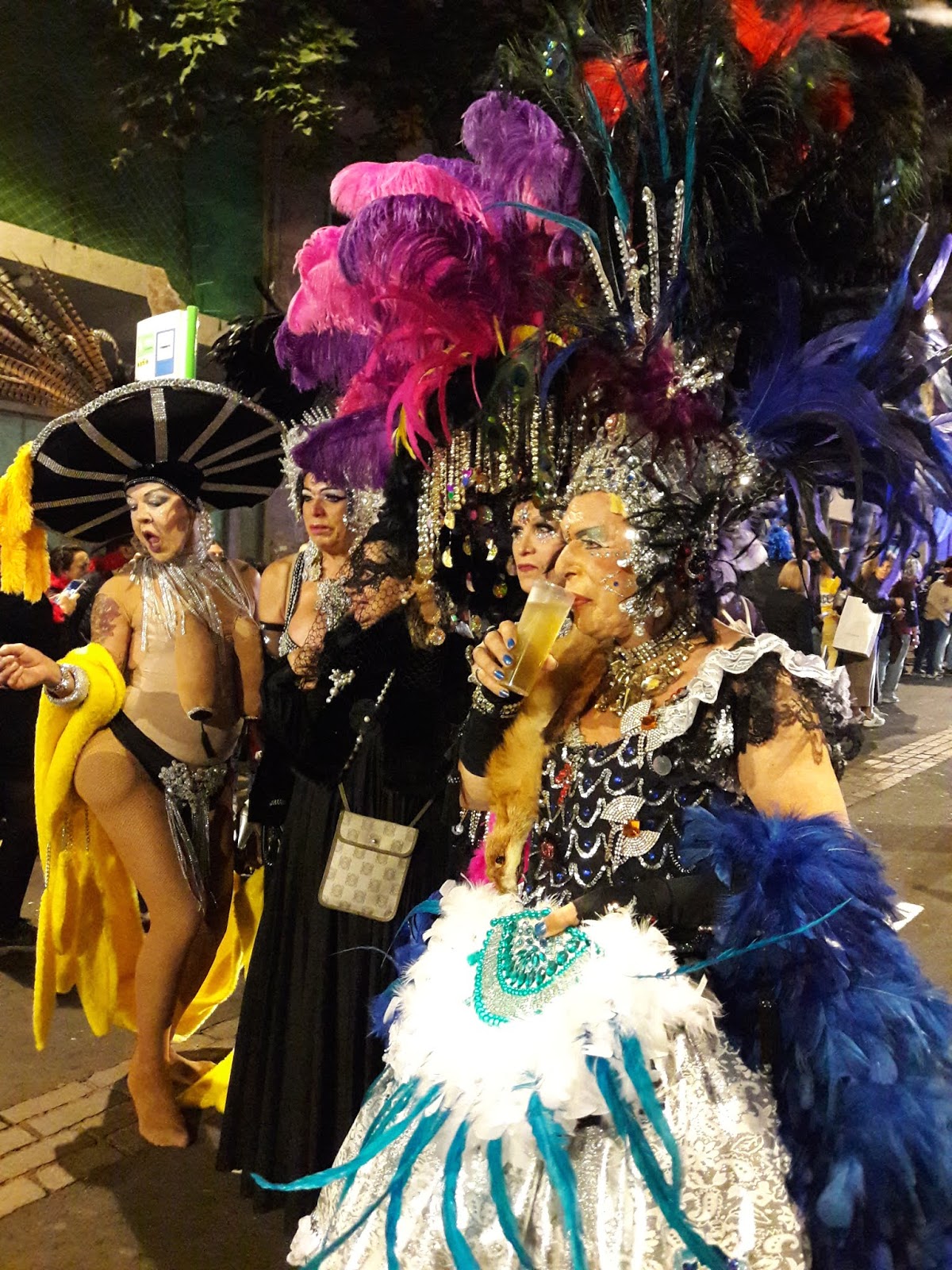
What more can be said about the Burial of the Sardine? It's already been described as blasphemous, rude, pornographic. All true. Surreal is also applicable, but even if you put these all together and times whatever vast level of weirdness you then imagined by a thousand, you'd still come nowhere near. And yet it was as safe, friendly and accessible as any other night at carnival (and a whole lot more so than any average Saturday night in a British town.) (Right) just a few regular guys on 'boys night out' at the Burial of the Sardine in Santa Cruz.

It's called the Entierro de la Sardina (Burial of the Sardine) (even though it's cremated) and the 'wailing widows' are blokes in drag who mourn the end of carnival and the beginning of Lent, even though the party carries on for days.

The significance of the sardine - so I was told - is that it represents the return from the anarchy and craziness of carnival, back to the everyday order and everyday food, like sardines. Blame has also variously been pointed at a side of pork and some smelly sardines or a particularly skinny minister in Madrid.

The wailing widows are dressed like tarts, because now they've lost their husband (the sardine), they have no other means of support, so they'll have to go "on the game". And for some reason the "clergy", bless the mourners with dildos.

Does it even have to make sense? It's one of carnival's biggest party nights.

La Laguna Ahora explained that during the "Fiestas de Invierno" (Winter Festival) - the name that carnival had to go under during Franco's dictatorship - they used to have to mess with the calendar to make sure that the sardine's funeral - which was "prohibited" anyway - didn't coincide with Ash Wednesday. Once liberties were regained, the event was restored with enthusiasm.

One year, also symbolically, Guy Fawkes stylee, an effigy of the lawyer who represented the Neighbours' Association in their complaint about the noise of Carnaval was also cremated. OK, so maybe 155 dB - louder than a jet engine roaring 100 feet from your ears - was a bit much for midnight, but their protests fell - pretty literally - on deaf ears. Nobody was going to do away with more than 200 years of the "institution" of carnaval in the streets of Tenerife's capital.

Oh and you'll encounter people with seriously and hilariously impaired judgement. I've no idea what they were on, but impaired enough to come up to this dodgy character (left), request photos with him like he was some sort of tourist attraction and ask "¿Es de verdad?" (Is he for real?) No boys and girls, this 'nun' is my husband in a cheap ebay fancy dress. It did add to my amusement for the night. 

We were able to catch up with my friend Lee de Caires, better known by most for ¡Qué Gran Viaje! - see video below - but alas I didn't stay for the sardine's cremation as I had nasty flu. At least that gives me a good excuse to go back again another year, doesn't it? 

In Santa Cruz, the the funeral procession leaves from the Calle Juan Pablo II at around 9 pm, taking a route through Méndez Núñez, Pilar, Villalba Hervás, La Marina and ending up in the Plaza de España, for the burning of the sardine.