The most detailed English language website on the island

Weather - Tutiempo.net
     

After more than 20 years, posts here will now only be occasional (see why) for big events such as Tenerife Carnaval, so please "Like" and follow our Facebook Page to get future updates.

Showing posts with label Canarian Cuisine. Show all posts

Tuesday, 10 May 2022

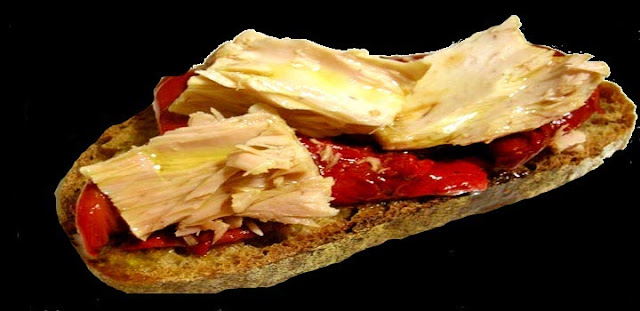
Montadito gomero (Open Faced Sandwich)

Montadito gomero (Gomeran Open Faced Sandwich)

In days past, an armadero in Tenerife was a tapas-sized bite or small portion of food that serves as an accompaniment to an alcoholic beverage, especially wine. The success of a guachinche or a good winery is not only in the wine, but also in the armaderos. And this deceptively simple Montadito gomero (Gomeran Open Faced Sandwich) is an example of such an armadero, which is reproduced here as much for the culinary aspect, as for the use of a couple of 'Canarianisms' - local words. Armadero was certainly new to me.

Ingredients:

Slices of bread from a pan normal (ordinary bread in Tenerife, or baguette)

Good quality tinned tuna in olive oil

Roasted red pepper (from a jar)

Method:

Slice the bread on the diagonal to achieve a larger surface, then lightly toast the slices - they need to remain tender. They can be toasted in a toaster or in the oven.

Once the bread is toasted, put a few strips of pepper on top of the bread, then put half the tuna from a can on top of the pepper.

That's it. Accompany with a good glass of wine. 

Friday, 15 April 2022

Sardine sandwich tradition on Good Friday

Bocadillos de sardinas

It is customary that on Good Friday, between the Magna and Silencio processions in La Laguna, in many of the brotherhoods that sardine sandwiches are eaten. Apparently it was a gentleman named Don Juan "Pitera" who was the first to prepare them for the brotherhoods of the Capitular cathedral brotherhood and that later spread to almost all the others.

The sardine sandwich is often perceived as a dinner or food for lazy people. Its humble origins and its simple preparation have made it a "survival meal" for many workers and it helps thousands of students to be able to afford one of the meals of the day with little money. However, its advantages go far beyond saving time and money, since sardines are a very healthy food and very suitable for a late-night snack on Good Friday. Apparently.

Ingredients for each sandwich:

1 bread roll (preferably the same length as the canned sardine)
2 sardines in olive oil (canned sardines)
1 tablespoon of the oil from the can
1 tomato sliced
1 teaspoon oregano

Do you need instructions? No, I thought not. 

Thursday, 24 February 2022

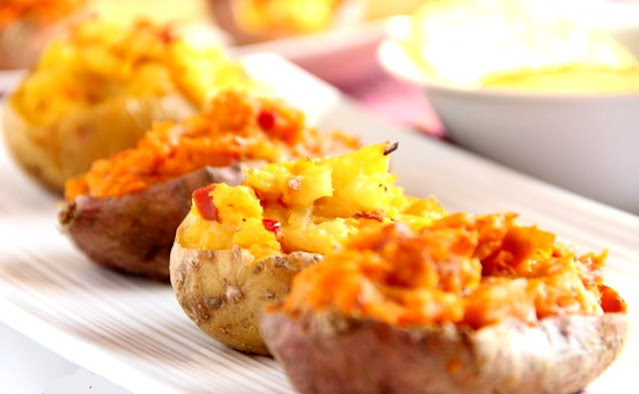
Batatas asadas rellenas de champiñones (Mushroom Stuffed Roasted Sweet Potatoes)

Batatas asadas rellenas de champiñones (Mushroom Stuffed Roasted Sweet Potatoes)

The batata (sweet potato), also known as boniato, is a tuber similar to the potato but that has nothing to do with it in terms of flavor. The sweet potato is sweet and orange in color. Its color is due to the large amount of carotenes it contains, which makes it a great antioxidant. Its glycaemic index is moderate, so it can be consumed regularly. Despite being rich in carbohydrates, it has very few calories. Sweet potatoes are used in both sweet and savoury recipes. This time they will be roasted in the oven, with a mushroom filling.

Ingredients:

2 sweet potatoes
1 red onion
1 clove garlic
1 leek
150 g of mushrooms
Herbes de Provence (thyme, rosemary, oregano, and basil)
Salt
Black pepper
1 egg

Method:

Preheat the oven to 180º. Choose two sweet potatoes that are about the same size and shape. Place them on parchment paper on a tray and roast until tender. The time will depend on the size you have chosen. Those of a medium size and take about 25 minutes. Prick them with a knife to check that they are done inside.

While they are roasting, prepare the filling. Finely chop the onion, leek, and garlic clove. Sauté them in a pan with a little olive oil.

Also chop the mushrooms until they are very small, add them to the pan. Sauté a few minutes until they are done. Remove from heat and reserve.

Remove the sweet potatoes from the oven and open them in half lengthwise.

Remove the flesh of the sweet potatoes, taking care not to break the skin.

In a bowl, mix the flesh of the sweet potatoes with the sautéed mushrooms. Add a little salt, ground black pepper, and sprinkle with a mixture of Provencal herbs such as rosemary, thyme, oregano, and basil. To give it a creamier texture, beat a small egg and add it to the bowl. Mix well.

Fill each skin of the sweet potato with the mixture that you have prepared and before serving, place them in the oven for 10 minutes so that they are warm. Also if you wish, sprinkle with a little cheese on top and gratin in the oven or under the grill.

Thursday, 17 February 2022

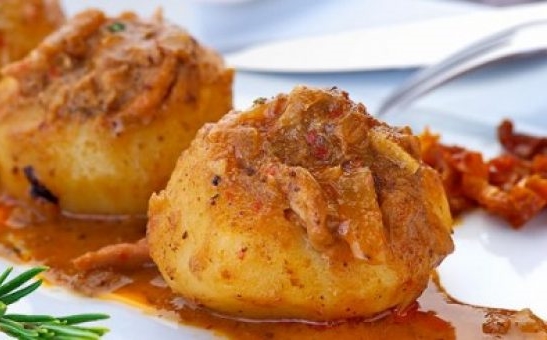
Papas rellenas de carne a la lagunera (Stuffed potatoes La Laguna style)

Papas rellenas de carne a la lagunera (Stuffed potatoes La Laguna style)

These La Laguna-style stuffed potatoes are a very simple dish.

Ingredients:

(For 4 servings)

  • 8 medium potatoes
  • 600 gr. minced lean pork meat
  • 2 cloves of garlic
  • 3 sprigs of parsley
  • Salt
  • freshly ground black pepper
  • 2 eggs

For the sauce

  • 75ml Of olive oil
  • 1 onion
  • 1 glass of white wine
  • 2 cloves of garlic
  • parsley
  • 1 bay leaf
  • saffron
  • Water

Method:

Mix the minced meat with the garlic and parsley very finely chopped, the eggs and salt and pepper. Knead well so that everything is mixed and let it rest while we prepare the potatoes.

Peel and wash the potatoes. With a corer or a hollower - melon baller perhaps - remove the central flesh from the potatoes, until they form one cm thick 'bowls'.

With a teaspoon fill the potatoes with meat.

(If you have meat left over, form some meatballs with it to serve alongside, or reserve for another meal. The potato balls that you remove with the hollower can be reserved to fry them and accompany another dish, or add them together with the stuffed potatoes.)

In a large saucepan, heat the olive oil and seal the potatoes on the side where the filling was introduced, so that in this way the meat does not come out when you cook them. Reserve.

In a mortar, crush the garlic and parsley.

Finely chop the onion and brown in the oil where you had sealed the potatoes, add the white wine and let it cook for a couple of minutes. Add the saffron, the bay leaf and add back the stuffed potatoes, cover them with water, at which point add the crushed garlic and parsley.

Leave to cook until the potatoes are tender, if necessary adding more water. Check the seasoning halfway through cooking in case it is necessary to add a little salt.

Papas rellenas de carne a la lagunera 

Tuesday, 11 January 2022

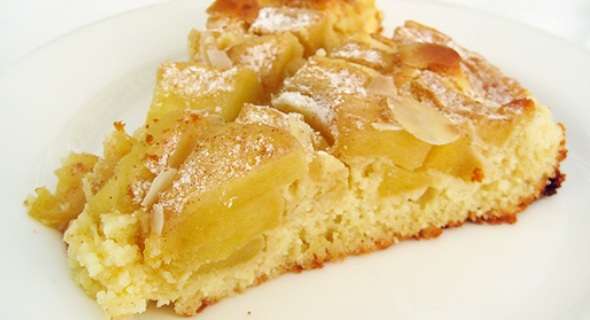
Pastel de plátano (banana cake)

Pastel de plátano (banana cake) a variation of apple cake

In early lockdown, banana bread had a moment, but you probably haven't tried this version of Pastel de plátano (banana cake) brought to us from the Municipal Market in La Laguna. This recipe is a variant of apple cake.

Ingredients:
  • 3/4 cup sunflower oil
  • 2 cups of flour
  • 2 cups of sugar
  • 4 eggs
  • 100 grams of chopped walnuts
  • 4 ripe bananas mashed
  • 1 teaspoon baking powder
  • 1 teaspoon cinnamon
  • 1 pinch of salt
Method

Preheat the oven to 200º. Grease and flour a baking tin. Mash the bananas with a fork and mix all the ingredients with a wooden spoon, including the oil, except the nuts. Finally, the chopped walnuts are incorporated with a little flour so that they do not sink into the mixture. Place in the oven and bake for approximately 45-50 minutes, until browned.

Wednesday, 22 December 2021

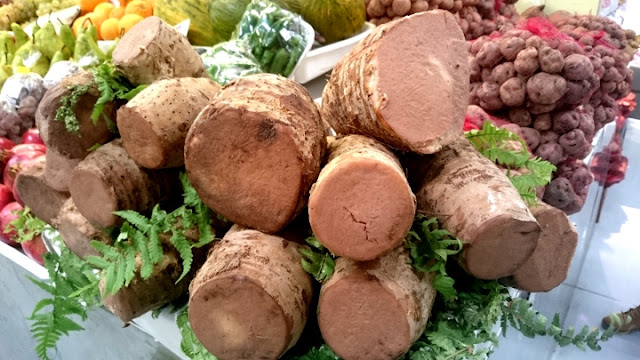
Stewed yams, a delicacy for Christmas Eve

Ñames (Yams) at the Mercado (Municipal Market) in La Laguna

Stewed yam is one of the most typical products of the land on the tables of the Canary Islands, especially in Tenerife and La Palma, in the Christmas and Carnival celebrations and is undoubtedly one of the favourite desserts at Christmas. This tuber, a direct relative of potatoes, sweet potatoes and cassava, is usually served, with mojo, as a garnish to accompany salty fish, but during these holidays it is presented as an appetizer or dessert, chopped and sprinkled with sugar, cinnamon or accompanied with palm honey. 

In the Canary Islands it is one of the oldest crops (mentioned by biologist and writer José de Viera y Clavijo in the 18th Century) and present in the basic diet in the past. It's said that "yams have killed a lot of hunger", because it was an important resource, especially in times of famine or poor harvests.

The so-called ‘ñamera’ (yam plant - often seen in squares all over the islands - requires a lot of water, so the ravines and springs (patameros) are the traditional areas of cultivation on the islands. Also for this reason it is more common to find them on the northern slopes of the more humid islands, especially on La Palma; in the Macizos de Anaga and Teno in Tenerife, La Gomera and Gran Canaria.

Although it doesn't need much care, the plant can reach a height of 90 centimetres and the tuber is deep-rooted, making it difficult to harvest. This is probably why it isn't usually a cash crop. Small tubers that form at the base of adult plants, sown in pots and then transplanted, are usually used as seeds. However, the most common method is to replant tubers in spring.

In the Canary Islands, only the tuber is consumed, while in other areas of the planet the stems and leaves are also cooked. The tuber is highly valued for its sweet taste and texture, but it can only be eaten stewed, as it contains certain substances that make it indigestible raw, causing serious intestinal problems.

The manner of consumption is also different depending on the island. In Tenerife and La Palma it is usually eaten accompanied by salted fish, fried eggs, or as a dessert at Christmas, Carnival and Easter, accompanied with cheese, cinnamon and sugar, or palm honey. In Gran Canaria and La Gomera it is also added to stews and sancochos, to give them a special sweetness and thickness.

Historically, the yam leaf was also used, either to cover certain products that were to be kept fresh or moist, or as a cover for a jug to transport fresh water.

The traditional process of stewing yams in the Canary Islands is somewhat cumbersome, since it requires several days and a previous treatment of heating and drying of the tubers. So it is fortunate that already stewed yams arrive at the markets on the islands around Christmas time.

Ñames guisados, un manjar para Noche Buena

Tuesday, 14 December 2021

Truchas de Batata (Sweet Potato Turnovers)

Truchas de Batata

One of my, admittedly many, favorite sweet things of the Christmas season are these delicious little Truchas de Batata (Sweet Potato Turnovers). Since you may not have them available in the shops near you, here's the recipe:

Ingredients:

For the pastry:
3 tablespoons of lard
1 small glass of olive oil
500 grams (1 l.b.) flour.

For the filling:
500 grams (1 l.b.) sweet potatoes
250 grams (8 Oz) ground almonds
1 small cup of caster sugar
3 egg yolks
A teaspoon of aniseed
A dash of rum
A dash of aniseed liqueur
A teaspoon of ground cinnamon
Grated lemon rind
Oil for frying.

Preparation:

Filling: Boil the sweet potatoes in water with a little salt. When they're done, peel them, pound to a pulp and mix them with the almonds, flavourings and liqueurs.

Pastry: Mix together lard, oil and flour until a mass is formed and leave to rest for a short time. Cover a surface with flour and roll out the pastry until very thin. Cut out small rounds with a cup and put a small amount of filling into the centre of each. Close them by folding in half to make little semi-circular patties. Press down and seal with the aid of a fork. Fry in hot oil then sprinkle with sugar to serve.

Tuesday, 7 December 2021

Turrón de gofio (Gofio nougat)

Turrón de gofio (Gofio nougat)

There are many ways to eat the Canarian staple, gofio, but in the run up to Christmas, what better way than as the traditional, seasonal sweet, turrón.

Ingredients:

100 gr gofio de millo (corn gofio)
75 gr of honey
125 gr ground almonds
50 gr of sugar

Method:
  1. Toast the gofio in a non-stick pan over a low heat, stirring. Once toasted remove from heat and let cool slightly.
  2. Meanwhile, put the sugar in a saucepan on the heat and allow it to caramelize. When the sugar acquires caramel texture, add the ground almonds and stir for a few minutes.
  3. Place baking paper into the mould you have chosen for the preparation of this nougat (you can use a rectangular silicone mould or half of a milk brick).
  4. Pour the almond and caramel mixture onto the baking paper, and allow to cool slightly.
  5. When it is cool enough to handle, add the gofio and honey and knead so that it is well integrated.
  6. Put the dough back into the mould lined with baking paper, flatten the surface, cover with more baking paper and place in the fridge for a few hours.

Translated from: Turrón de gofio: 2 recetas de Navidad canaria

Monday, 22 November 2021

Fabada lagunera (Bean stew, La Laguna style)

Fabada

Fabada or Fabada asturiana, traditionally from the northern Spanish community of Asturias, is another classic for cold weather. This version from La Laguna, can be tasted in any house, restaurant or guachinche, in the city.

Ingredients:
  • 250 g of white beans
  • 1 carrot
  • 1 leek, washed and left whole
  • 100 g of chorizo
  • 1 blood sausage (morcilla - black pudding)
  • 100g bacon
  • A ham bone
  • 100 g of pig's ear (or tail)
  • Peppers
  • a pinch of salt
Method:

Soak the beans in cold water the night before. The ham bone and the piece of pork ear or tail are also soaked in warm water.

The next day, in a large pan, place the beans together with the carrot and leek, bacon, the ham bone and the piece of ear or pork tail. [Latter optional for the squeamish.]

Cover with cold water and place in on the heat. Bring to the boil, skim and cook over low heat (until the beans are done, which varies depending on the bean), ensuring that the beans are always covered with water. Add cold water in small quantities, as needed.

Add the whole morcilla (blood sausage) and chorizo ​​at any time but bearing in mind that you have to let them cook together with the beans for just 20 minutes. Once the blood sausage and chorizo ​​are stewed, remove them from the stew and reserve.

The broth should be thick; to achieve this, mash some beans along with the cooked vegetables and return to the pan.

Once the beans are cooked, remove from the heat and leave to rest for 10 minutes. Once rested, season and serve with the meats and sausages divided into pieces. 

Thursday, 11 November 2021

Dulce de Membrillo (Quince Preserve)

Dulce de Membrillo (Quince Preserve) Ambrose Little from Hamilton, NJ, US, CC BY 2.0

Dulce de Membrillo (Quince Preserve) is typically eaten with Manchego cheese, as well as being used as a filling for truchas de membrillo (quince turnovers), both especially around Christmas. Home made quince preserve is unbeatable and is nothing like the stuff you can buy in the supermarket. And you need just two ingredients: quinces and sugar. 
  1. Before you start, wash the quinces well. Place them in a large pan, cover them with water and bring it to a boil, at which point, drop the temperature to medium and leave the quinces to cook for 40—45 minutes, depending on the size of the fruit. 
  2. When the time's up, remove the quinces carefully and allow them to cool until they can be handled safely. Peel and core them and then cut the flesh into small pieces. 
  3. Weigh the quince, as you will need 80% of this weight in sugar. So for every 100g of quince, you'll need 80g of sugar: for a kilo of fruit, 800g of sugar. 
  4. In a large pan, add the quince pulp and all of the sugar. Stir and cook over a low to medium heat. Little by little the sugar will integrate with the fruit. It should take around 10 minutes for the sugar to completely dissolve.  
  5. Blend the mixture with a stick blender or food processor, then continue cooking the mixture for around an hour, depending on the weight. Stir from time to time with a wooden spoon (never metal) so that the mixture does not stick to the bottom of the pan and cooks evenly. The mixture will become thicker and darker as time passes. When the spoon will stand up by itself in the mixture, then you have the desired texture. At this point, if you require it to be still finer, give it another pulse of the blender. 
  6. Turn the mixture into a suitable plastic container, cover with the lid and leave the paste in the fridge for 24 hours so that it obtains the consistency and texture needed. 
Quince preserve will store in the fridge for up to 3 months or longer. For longer storage membrillo can be frozen well-wrapped for up to a year.


Thursday, 28 October 2021

Escaldón de gofio ("scalded gofio")

Escaldón de gofio Mojos Guachinerfe

Escaldón de gofio ("scalded gofio") is a traditional recipe from the island of Tenerife, its main ingredient being Gofio. The escaldón de gofio is obtained by boiling a meat or fish broth that is then poured over the gofio in an earthenware container (lebrillo) and kneaded. Gofio is one of the most emblematic products in the islander's diet, created from toasted and ground cereals.

This recipe is from Mojos Guachinerfe.

Ingredients

  • 150 g gofio (whichever you like best)
  • 800 ml fish stock
  • 2 pulled pork ribs
  • Oil
  • 2 cloves garlic
  • Chopped onion (if you like)
  • Mint
  • Cilantro Mojo
  • Mojo Rojo (mild or spicy)

Steps

  1. In a frying pan, brown the garlic cloves a little.
  2. In a cauldron put the 800ml of fish stock and add the garlic cloves. Wait until it boils.
  3. Place 100g of the gofio in a bowl. Reserve the other 50g to add as required until you obtain the desired consistency.
  4. Adding the broth little by little, mix well with a fork.
  5. Crumble one of the pork ribs and add it to the mix to add flavour and texture.
  6. Serve the escaldón with other crumbled rib, chopped onion and the mint.
  7. A little Cilantro Mojo and Red Mojo (mild or spicy, to taste) are added on top. 

Escaldón de gofio

Thursday, 14 October 2021

Carne de Cabra (Goat Meat Stew)

Carne de Cabra (Goat Meat Stew)

INGREDIENTS

  • 1 kg goat meat, diced
  • 250 gr chopped onion
  • 1 cup oil
  • 1 cup red wine
  • 1 red pepper, diced
  • pimentón / paprika
  • thyme
  • clove
  • cumin
  • water
  • salt

INSTRUCTIONS

  1. Season the meat.
  2. Sautéed the onion in a frying pan with oil, add the meat and fry until golden brown.
  3. Then add the pepper, paprika, thyme, clove, cumin, and wine, and leave it over heat for about 15 minutes.
  4. Finally, the water is added until the meat is covered and leave to cook for approximately 1 hour and a half.
  5. Serve with wrinkled potatoes. 

Thursday, 7 October 2021

Conejo en salmorejo (Rabbit in marinade)

Conejo en salmorejo. Image: Javier Lastras Some rights reserved

One of the most typical dishes of the Canary Islands, Conejo en salmorejo (rabbit in marinade) has its origins in the peninsula, as it appears much earlier in cookbooks in Aragon. This recipe comes from La Orotava, from the Tasca Bodegón "El Raspón".

Ingredients
1 rabbit of about 2 kg. approx., cleaned and jointed
750 ml of white wine
250 ml. red wine vinegar
1 head of garlic (about 15 garlic cloves approx.)
1 bay leaf
1 chilli
1 tablespoon ground cumin
1 tablespoon of sweet paprika
1 tablespoon of thyme and another of oregano.
Coarse salt (50 g. Approx.)
600 ml. mild extra virgin olive oil 

How to make rabbit in salmorejo

The greatest difficulty of this recipe would be to clean the rabbit, although you can find it ready cleaned and cut up in most supermarkets and butchers. If you decide to cut it up yourself, you must be careful, as small pieces of bone may come off. Wash the rabbit and remove all its fat. Add the liver (optional). Reserve everything in a large container.

Put the peeled garlic cloves and the chilli in a mortar. You can remove the seeds from the latter if you prefer, but this spicy touch is important to the recipe. Crush everything to a paste, then little by little add the paprika, vinegar, white wine and finally a handful of coarse salt.

Cover the pieces of rabbit with the marinade, the bay leaf and the rest of the spices. All the pieces need to be well covered so that they soak up the flavour well and the wine and vinegar act to soften the meat. Cover in an airtight container and marinate in the fridge for 24 hours. After the maceration time, remove the rabbit from the marinade.

Add the olive oil to a deep casserole and place over a low-medium heat. When the oil is hot, drain the rabbit and, with a fork, take one of the pieces of rabbit at a time and place them in the hot oil. Fry the rabbit, for around 15 minutes over low-medium heat, then increase to hot, so that they are done well and golden brown. Remove and place them in a large casserole.

Turn off the heat and pour the remaining marinade over the oil in which the rabbit was cooked. Bring to a boil and cook for about 10 minutes, so that the alcohol in the wine and vinegar evaporates. Add the salmorejo to the casserole with the rabbit and simmer for 30 minutes over medium heat, until the rabbit is tender. Turn the pieces of rabbit after 15 minutes, if necessary. If it runs out of liquid, add a little water. Season to your liking. 

Allow it to rest for a few minutes before serving and sprinkle with a little chopped fresh parsley or coriander. Serve with a side of Papas arrugadas (wrinkled potatoes).

Tuesday, 28 September 2021

Brocheta de pollo al romero (Rosemary chicken skewers)

Brocheta de pollo al romero (Rosemary chicken skewers)

As the folks at La Laguna Ahora explain, "This recipe is ideal for an informal meal, we saw it in Oliver’s Twist and we could not resist trying it, with a really delicious result. The rosemary chicken skewers are very tasty, prepare a good portion because you are going to love them." We assume they're referring to Oliver’s With A Twist in Los Cristianos, so make this yourself while you wait to get a booking. 

Ingredients: 
3 filleted chicken breasts
12 slices of bacon
1 lemon
1 head of garlic
1 sprig of rosemary
black pepper
olive oil and salt.

Preparation: Start by preparing the marinade, grate the lemon rind without reaching pith, de-leaf the rosemary, peel the garlic cloves and put all the ingredients in a large mortar, add black pepper and salt and crush well. Add olive oil and mix well.

Cut the breast fillets into strips about two fingers wide and place them in the prepared dressing, leave to marinate for a minimum of half an hour.

Cut the bacon slices in half lengthwise. Prepare two or three skewers per person, depending on how much you load them. To do this, take a strip of chicken together with one of bacon, skewer it at one end, fold the chicken and bacon and skewer again. 

Repeat the operation until all the ingredients are used, then, on a grill or griddle, pour a little oil from the marinade and grill them by turning them so that they brown evenly. 

Thursday, 23 September 2021

Pata asada canaria: Canarian roast leg of pork, recipe adapted to the home oven

Canarian roast leg of pork, recipe adapted to the home oven Directo al Paladar

Anyone who has been to the Canary Islands knows one of its most popular dishes, oven-roasted pork leg, similar to the mechá meat of Andalusia but with an unmistakable flavour of spices and aromatic herbs. As this dish is normally made with a whole pork leg, today we are going to make Canarian roast leg, adapting the recipe to the home oven, and to a medium family size (serves 6). Of course, you can adapt the recipe to larger quantities, calculating between fifty minutes and one hour for each kilo of meat. 

Ingredients:

Lean piece of leg of pork 1.2 kg
Fresh rosemary to taste
Coarse salt
Ground black pepper
Black peppercorns
Fine herbs
Extra virgin olive oil

Method:

Start by making diamond-shaped cuts to the skin of the pork leg. Cover the leg with coarse salt and leave it in the fridge for about two hours. After that time, take it out of the fridge, bring it to room temperature and remove the salt.

In a mortar, crush black pepper, fresh rosemary, aromatic herbs and seasonings to your liking. Spread the pork leg with olive oil and paste this mixture of spices on the surface.

Bake for one hour for each kilo of meat at 200º. If using a whole leg or a 3 kg piece for example, protect with aluminium foil after one hour of cooking so that it does not burn. If you use a kilo-odd piece as here, an hour and a quarter is enough, without the need to cover.

Allow the meat cool in the oven once switched off - it will take an hour or more - and then wrap it in aluminium foil and place it in the fridge to cool fully for two hours. 

Canarian roast leg of pork is excellent both cold and hot and can be eaten as an aperitif, as a cold meat, to make sandwiches, and of course also as a main dish, heating it with the juices from the roast and accompanying it with wrinkled potatoes or cooked rice. 

Thursday, 16 September 2021

Potaje de berros (Watercress Pottage)

Many and varied are the recipes for Potaje de berros (Watercress Pottage), today we bring you a watercress soup in the style of the populous neighbourhood of Taco.

Ingredients:
500 g of watercress
250 g of beans soaked for 12 hours 
½ kg of potatoes
1 corn cob
1 onion
1 tomato
2 or 3 cloves of garlic
1 green pepper
Saffron
Oil
Salt
Gofio

Method:

1. Put water on to boil in a large pan and add the soaked beans. When they start to boil, “frighten” them with cold water. (To quickly bring the pan down to a simmer?)

2. Add the well-chopped watercress and the corn cob, which is usually cut into slices.

3. Let cook for 1 hour and then add the potatoes, in not too small pieces so that they do not fall apart. Add the onion, pepper and tomato, all cut up. Finally add the crushed or sliced ​​garlic cloves, along with a drizzle of oil and a little saffron and salt.

4. Leave it on the heat for about 30 minutes more until all the ingredients are well cooked.

5. Remove from the heat and rest a little before serving. Serve with Escaldón de gofio.

Thursday, 9 September 2021

The 11 Best Recipes of Canarian Cuisine

Las papas arrugás con mojo, probably so typical it's become stereotypical

Every list of the "best" of something is bound to be highly subjective. This, therefore, is probably more accurately a list of eleven of the most typical dishes of the Canary Islands, which is nowhere near as seductive as headlines go, but still not to be missed. But I agree that the Canary Islands have exquisite ingredients such as its cheeses, its wines and its fish, indigenous and exclusive products such as gofio and its sauces or mojos that make gastronomy one of the attractions of any visit to the fortunate islands. 

1. Papas arrugadas con mojo (Wrinkled potatoes with mojo)

Papas arrugadas is perhaps the best known dish in the Canaries. Cooked potatoes that are saturated with salt - originally it was sea water - to make the skin wrinkle. They are eaten hot with the skin, dipping the potatoes in the green or red mojo or spicy, mojo picón. A true exaltation of a humble ingredient such as potato to make a dish of authentic luxury. 

2. Sancocho Canario (Canarian Fish Stew)

Sancocho Canario is usually eaten at Easter and is a traditional dish on the island of Gran Canaria, although it can be eaten on the other islands. It is a fish elaboration - it is usually cherne (stone bass or bass groper), sea bass or salted sea bass - that is consumed with potatoes, sweet potatoes, mojo and gofio forming a pella or loaf.

3. Conejo en salmorejo (Rabbit in salmorejo)

Conejo en salmorejo (rabbit in salmorejo) is a tasty stew with a powerful flavour, which is eaten accompanied by wrinkled potatoes and is enjoyed with the wines of Tenerife.

4. Queso asado canario con mojos (Canarian grilled cheese with mojos)

Canarian cheeses, mainly made with goat's milk, are tasty, creamy and with a powerful flavour. One of the most peculiar ways to enjoy them is roasted on the griddle (or oven tray), served with the different mojos that are common on the island. (Personally, I prefer the version with the contrasts of spicy mojo picón and sweet miel de palma.)

5. Carne de cabra compuesta (Goat meat stew)

Carne de cabra (Goat meat stew) is a popular dish on the islands of Fuerteventura, Gomera, Hierro and Tenerife. 

6. Potaje de Berros (Watercress Pottage)

Watercress pottage is a Canarian dish, from popular cuisine. It is a simple and inexpensive dish, based on cooking vegetables with pieces of meat or pork ribs (although I've had many a vegetarian version too), with abundant watercress leaves and beans. 

7. Pata asada canaria (Roast leg of pork)

Pata asada is a way of preparing pork - usually the leg or ham - that achieves a meat with a delicious texture. Although it can be eaten as a cold meat, in a similar way to ham, it's usual to serve this meat cut into slices and accompanied by a sauce, like any other roast.

8. Ropa vieja canaria (Canarian old clothes)

Ropa Vieja Canaria is a traditional dish using leftovers, which makes them take on new life in a dish that even surpasses the one from which it comes. Although it is traditional in Canarian cuisine, is also made in other regions of Spain with some variations.

9. Escaldón de gofio (Scalded gofio)

Gofio, toasted and stone-ground grains to which a pinch of salt is added, is an intrinsic part of Canarian cuisine. One of the most interesting preparations is the Escaldón de gofio, made by adding gofio to fish stock and stirring until a thick cream or puree is obtained. 

10. Tortillas de calabaza (Pumpkin tortillas)

Pumpkin tortillas are a traditional Canarian dessert, which is usually prepared around Carnival time. Made with pumpkin, eggs and anise, it is a very popular, simple sweet, reminiscent of torrijas or Rebanadas de Carnaval (French Toast), when finished by sprinkling the tortillas with sugar and cinnamon. See also Tortitas de Carnaval.

11. Frangollo

Frangollo is one of the richest desserts in Canarian gastronomy, along with quesillo, a variant of flan that is usually prepared on the islands and is also highly appreciated. The frangollo recipe is a thick, unroasted cornmeal-based dessert.

Thursday, 26 August 2021

Pastel de Tres Leches (Three Milk Cake)

Pastel de Tres Leches in a bar in El Palmar, Buenavista del Norte

It's not a great image and you can see that I'd already made a right mess of the table with my main course, but this is a desert I had once, as a birthday treat, in a bar in the El Palmar Valley in Buenavista del Norte. It was their version of the dessert, Pastel de Tres Leches (Three Milk Cake), a sponge cake soaked in a mixture of three kinds of milk. To be honest, we sub-title this "heart attack pudding", because you can almost feel your arteries hardening before you even dig your spoon into this calorie, carbohydrate, cholesterol and fat-laden delicacy, but we figure it's probably OK if reserved for a once-a-year treat. 

And an easier, lazier, recipe that is this tasty, you will never find.

Ingredients: 

Sponge cake (make it if you must, but a "block" of dense, store-bought Madeira cake works just great and yields around four generous portions.)
1 can of condensed milk
1 small can of evaporated milk
Small pot of double cream
A slurp of rum (to taste)

Method:

Place each portion of sponge in individual deep dishes. In a bowl, jug or blender, combine the three milks and add a splash of rum to your own liking. Mix well.

About half to an hour before you wish to serve, pour some of the milky mixture over each of the sponges and allow them to wallow in the fridge to soak.

Monday, 16 August 2021

The famous Sangría of San Roque

Sangría

Whilst the romería once again cannot take place this year, we can get the flavour of the event. There are many ways to prepare Sangria, but today we give you the near mythical recipe for the sangria distributed at the Romería de San Roque in Garachico, which usually takes place each year on 16 August.

Sangria takes its name from the reddish color obtained from its main ingredient, red wine. (Sangre = blood. Sangria means bloodletting in Spanish). 

Tips for making the perfect sangria
  • First of all, use a decent wine, neither a gran reserva nor a tetra-brick.
  • Always use hard fruit, such as peach, apple, pear, etc. Never use canned peach or pineapple.
  • The maceration time of the sangria must be at least 2 hours. That will give the fruit time to transmit flavours to the wine.
  • Sweeten to taste, but remember that the fruit itself or if orange or lemon soda is added, it will already add sweetness.
  • You can add cognac or any other alcohol. Your call.
  • Put the ice in the glass, at the moment of serving. If you make a bowl of sangria as is normally done, do not add ice to the bowl, because if the ice melts, the sangria will be watery and diluted.
Ingredients:

1 litre of red wine
1 peach
1 apple
1 pear
Half a melon
1 cinnamon stick
Orange peel
Lemon peel
Sugar to taste
Half a litre of lemon, orange or plain soda

Note: Increase by half a litre of and half a fruit for every two people.

Method:

Place all the peeled and cut up fruits in a large bowl, add the wine, soda, sugar (to taste), citrus peels and the cinnamon. Marinate for two hours and serve cold. 

Thursday, 12 August 2021

Quesillo typical Canary Island dessert

Quesillo canario

Quesillo is one of the most typical and easy to make desserts in the Canary Islands, it is similar to flan, but made with a lot of condensed milk and on top of that, it's often served with cream in bars and guachinches throughout the island. A veritable calorific bomb, but nobody knows why it's called a quesillo since it doesn't contain any queso (cheese). 

Ingredients:

1 can of condensed milk of 370 g
1 and 1/2 cans of whole milk (measure with the condensed milk can)
5 eggs
The zest of 1 lemon
3 tablespoons of sugar or liquid caramel

Method:

In a bowl, pour the condensed milk, the whole milk, the beaten eggs (as for an omelette) and the lemon zest and mix well until a homogeneous mixture is obtained.

Make the liquid caramel: for this pour the sugar into a saucepan and melt it over low heat, without stirring, until it acquires a golden hue and is totally liquid. Be careful, it burns easily! (If you don't want to complicate life, just use liquid caramel from a bottle.)

Pour the liquid caramel into a mould, spreading it well over the entire surface.

Pour the milk mixture into the caramelised mould, then cook it slowly over a bain-marie for 1 hour and a quarter approx., taking care that the pan does not boil dry.

Remove from the heat and remove the mould from the pot. When it's cooled refrigerate for a minimum of 8 hours. To serve, unmold it by turning it over, but do it onto a plate or dish with a lip, since otherwise the liquid caramel may overflow.

Quesillo canario, uno de los postres más típicos y fáciles de preparar de las islas