The most detailed English language website on the island

Weather - Tutiempo.net
     

After more than 20 years, posts here will now only be occasional (see why) for big events such as Tenerife Carnaval, so please "Like" and follow our Facebook Page to get future updates.

Showing posts with label Museums in Tenerife. Show all posts

Tuesday, 20 April 2021

Military Museum, Santa Cruz de Tenerife

Museo Histórico Militar de Canarias in the Fuerte de Almeyda 
Image: CARLOS TEIXIDOR CADENAS, CC BY-SA 3.0

Of course that's what parking spaces are for!

Model ship. To be fair, not everything has an English label.

Cannon "El Gato" (The Cat)

This one's called "El Miserable". Wouldn't you be, if it hit you?

The flag of the British frigate, "Emerald", it is said, was found at dawn on 25 July 1797,
in one of the [British] launches tied up on the coast of Santa Cruz.

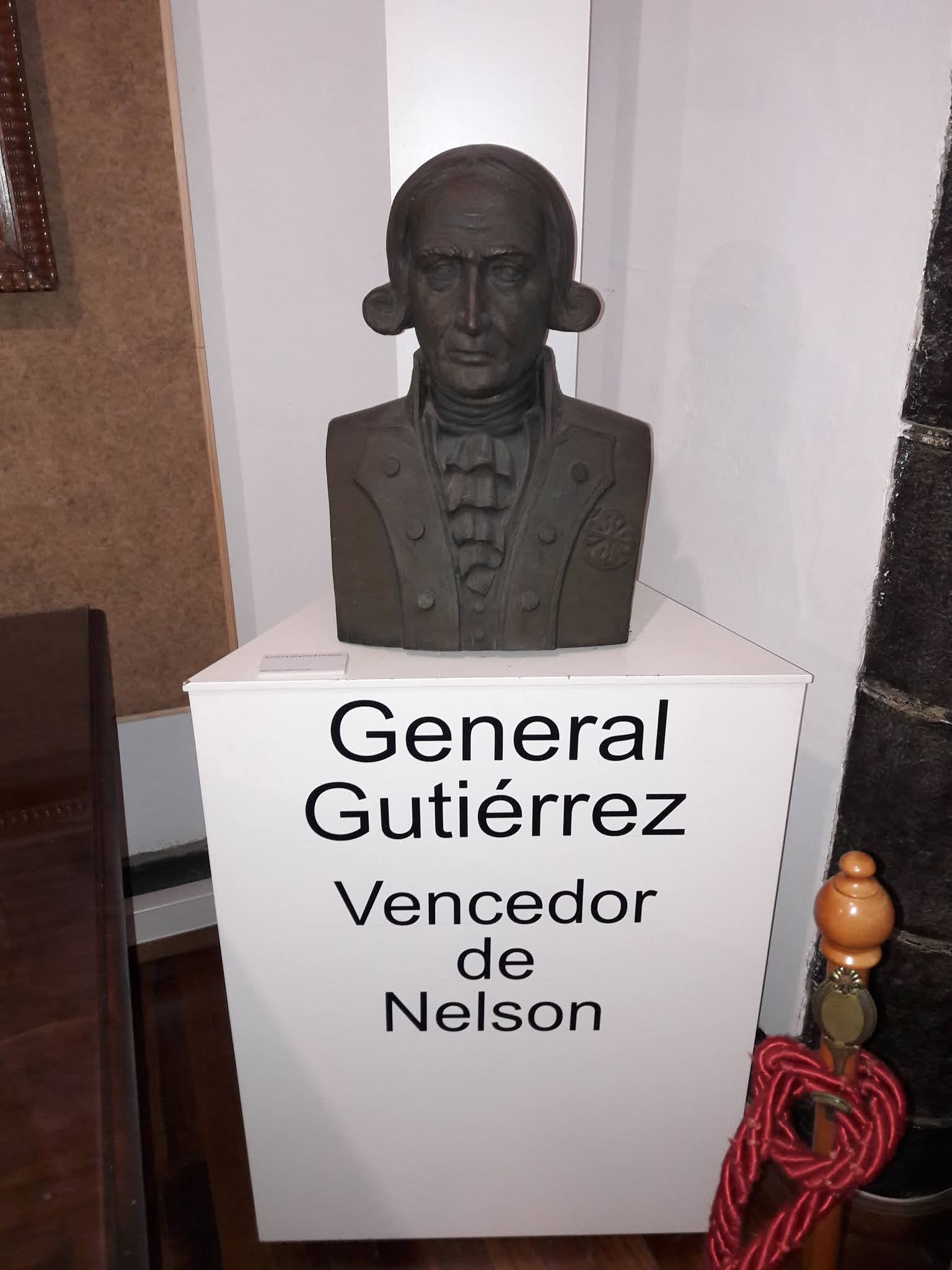
General Gutiérrez Trouncer of Nelson


Interior of the curved courtyard


Scale model depicting the Battle of Santa Cruz 1797


Sunday, 26 January 2020

Secret crypt discovered in the former Franciscan Convent in Garachico

Inside the Franciscan convent in Garachico - stone pavements and heartwood cloisters.

Restoration works at the former Franciscan convent building, annexed to the Town Hall and with 500 years of history, have brought to light a previously unknown crypt under the presbytery of the church with human burials

The restoration and renovation works that have been carried out in the old convent of San Francisco, in Garachico, have brought to light an ancient crypt located on the border with the church of Our Lady of Los Angeles, which until the 16th century was part of the same building. The finding, as DIARIO DE AVISOS learned recently, is of historical interest, given the age of the building: the convent and the Franciscan church were founded by Genoese Cristóbal de Ponte in 1524.

The tomb was located under the presbytery (chancel or sanctuary) of the chapel of Vera Cruz and at the time of the discovery its entrance was blocked. The crypt was found when some slabs were removed from the courtyard of the former convent and the earth was removed. The crypt has well placed remains inside, some consider probably of friars, something very common in convent churches. After a report made by the Cabildo de Tenerife, the Bishopric will study whether there is structural damage or if it can be opened to the public and visited. Pending the results of load tests and the walls, the crypt was sealed as a precaution. Until they are finished, the presbytery cannot be used either.

The current restorations will see a lift installed for access to the second floor, where the Library and the Municipal Archive are located. In addition to adapting spaces that were in very precarious conditions, such as the area of ​​the bathrooms - at risk of collapse - the rear part was left ready for the future installation of a cafeteria. Also, pavements are being removed from the hallways of the courtyards, which hindered mobility.

Another priority is the restoration of the old belfry, whose balcony was removed in 2015 due to the danger it posed, including the two bronze bells, sheltered in municipal warehouses. The former convent survived the eruption of 1706, when lava skirted around it and its religious images were rescued. The altarpieces and the marble funeral monument that represented its founder, Cristóbal de Ponte and his wife were, however, lost.

After the damage caused by the lava, the building was rebuilt with relative speed. In 1822, as a result of confiscation, the building was assigned to the local council to use as the Town Hall, the public jail and a primary school. When it deteriorated considerably, it was last restored in 1980 to become the House of Culture.

The local mayor reports surprise at the finding, but it seems it may not have been unknown to everyone. José Velázquez Méndez, official chronicler of Garachico, comments that Julio Rosquet García, who died last year and had been pastor of the municipality for 55 years, had spoken to him about an opportunity to go down to the crypt. He says that it has two doors and that the exact place of its location is the chapel of Vera Cruz. "Behind the altar is a gap with an old wooden staircase to go down to the crypt, which was that of the Ponte family," he says. “I told him that there was nothing there but cement bags, since when they did the last restoration of the building, they threw them there with garbage and rubble.

Tuesday, 9 April 2019

San Cristóbal Castle Santa Cruz de Tenerife

Cañón Tigre - decisive in the defeat of English Admiral Horatio Nelson in his attempt to invade Tenerife in 1797 - currently on display in the San Cristóbal Castle interpretation centre.

Underneath the Plaza de España in Santa Cruz and marked by the black lines that can be seen in the lake from above, are the ruins of the Castillo de San Cristóbal (Castle of San Cristóbal). Portions of the castle ruins were uncovered during the refurbishment of the plaza carried out by the Swiss architects Herzog & de Meuron in 2006 and these ruins are now open to the public via The San Cristóbal Castle Interpretation Centre. Reading that the centre was to be closed during carnival, we made this our first port of call after we arrived in the city.

Entrance is FREE, so it's well worth it to have a look if you're in the city and for those of a nervous disposition, I'll just mention that the steps are quite normal and the well-lit underground exhibit is not at all dark and dingy as I was expecting.

You don't need to be in Santa Cruz de Tenerife long before you realise that 25 July is a very important date! The whole centre is nicely done with information on various historical attacks on the city - not just the English ones, although that one always figures strongly in any history of the city and here is no exception - with good English translations under the information panels.

At the end of the 1990s, Santa Cruz de Tenerife still had not resolved the integration of the port into its urban core, a situation that led to the calling of several tenders. The Cabildo, the City Council and the Port Authority finally opted for the Herzog & De Meuron project, one premise of which was that the citizen, taking Calle del Castillo as a starting point, could move towards the waters of the Atlantic Ocean, following a longitudinal path in the manner of a previous project proposed by José Blasco Robles and José Luis Escario, which linked two existing squares – Candelaria and España – and a newly created one, the “Plaza del Agua”. In short, it was an ambitious staging that fused the metaphor of the gateway to the Atlantic with the protection of visible architectural vestiges, such as the Monument to the Fallen and the façade of the Alameda del Duque de Santa Elena, as well as other equally known but disappeared ones, such was the case of the Castillo de San Cristóbal. Some remains of its original walls appeared again during the remodelling works of the space and were incorporated under the surface of the recently created "Plaza del Agua". To access the find, a structure of galleries was set up to facilitate access to the venerable vestiges, a space that required the implementation of an interpretation centre. 

In this way, the San Cristóbal Castle Interpretation Centre was conceived, inaugurated in July 2008 and managed by the Autonomous Organism of Museums and Centres of the Cabildo de Tenerife through the Museum of History and Anthropology. The status of interpretation centre has eclipsed, to a certain extent, the nature of a site museum – the first in Tenerife – of the Castillo de San Cristóbal. Indeed, the aforementioned space offers citizens the possibility of visiting one of the most powerful heritage remains that have shaped its history, defending the island for more than two centuries against naval attacks.

In addition to the walls, the San Cristóbal Castle Interpretation Centre offers the possibility of contemplating other exhibits, such as the two tombstones that recall the name of the person who was the builder of the main fortress on the island of Tenerife, Juan Álvarez de Fonseca; and, of course, the presence of the “El Tigre” cannon, exhibited for the first time since it was put out of service, in the environment where it once played a more than outstanding role in the early hours of July 24 to 25, 1797, as evidenced by the testimonies of Monteverde and Grandi Giraud, protagonists and exceptional witnesses of the events.

From the very moment of the centre's inauguration, Tenerife Museums always had the suspicion that it would waste the museum space if it focused exclusively on the Gesta of July 25, an episode whose dimension and appeal have made us overlook the three previous centuries of history of the castle and, by extension, of the city. That is why it was proposed as a place for reflection on the history of Santa Cruz de Tenerife, conceived from the present to the past, taking into account the importance of the fortifications, but also in other episodes that date back at the time of the conquest. Since its inauguration, the San Cristóbal Castle Interpretation Centre has remained open to date, becoming a benchmark for citizens, both local and visitors. 


Restos del Castillo de San Cristóbal - Enrique Castrillo Núñez [CC BY-SA 2.5 es]

Monday, 18 March 2019

Santa Cruz gives green light to Museum of History of The City in the Palacio de Carta

Palacio de Carta in the Plaza de la Candelaria, Santa Cruz. Photo: rene boulay [CC BY-SA 3.0]

The City of Santa Cruz de Tenerife met on Monday to discuss in detail the project to create the first Museum of History of the City in the Palacio de Carta. This emblematic building, in the Plaza de la Candelaria in the heart of the city, was built between 1721 and 1752 for Matías Rodríguez Carta, who ordered the construction and then used it as his family residence. The building has since been the headquarters of the Civil Government, as well as of the Canary General Captaincy - not less than 19 General Captains have lived there - and even the headquarters of the Credit National Bank during the fifties. In recent years it had not been in use. It is now to be restored and will have a new life.

The Museum will show, via a journey through history, the most relevant events that have taken place since the foundation of the city, in 1494. 

With an interactive room on the ground floor, videos will introduce the visitor to aspects of the history and symbols of the city of Santa Cruz de Tenerife, such as old Santa Cruz, through images; tourist routes with historical and cultural content; a virtual reality zone and, finally, a 360º visualisation the city. 

The 360 degree virtual tour of the most important points of Santa Cruz, will include 15 selected areas of the city that stand out for their history or other noteworthy aspects. There will be seating in the central space of the room to provide access to various immersive experiences emblematic to the city such as: the Carnival, the Recreation of La Gesta (the annual Reenactment of the Battle of Santa Cruz de Tenerife the infamous assault, in 1797, launched against the city by Horatio Nelson), the Cruces de Mayo (Crosses of May) and of the Embarcación de la Virgen del Carmen. 

The central courtyard of the Carta Palace will host a rest area with explanatory panels, while the floor will be completed with a reception space, a shop and the Tigre cannon exhibition (currently in the The San Cristóbal Castle Interpretation Centre). The second courtyard will be dedicated to information about the building itself, with a detailed account of the origin of the Palace, its construction, evolution, as well as the purposes and venues that it has housed over time. In the mezzanine, the Museum will trace the chronicle of aboriginal world, before the fifteenth century, giving an account of the Guanche society that inhabited the Menceyato de Anaga that would encompass much of what is now the municipality of Santa Cruz. Through different rooms, the trip will continue to the foundational period of the nucleus after the Castilian conquest, its evolution and growth throughout the sixteenth, seventeenth and eighteenth centuries, until reaching the nineteenth, when Santa Cruz acquired a political prominence and social status both on the island and within the archipelago. Finally, the historical tour will reach the contemporary era, from the beginning of the 20th century to the present.

The museum complex will also have an assembly hall properly equipped to schedule activities, conferences or workshops and with a maximum capacity of 40 places. There will also be two rooms designed to host temporary exhibitions.

The original clock of the Carta Palace will be integrated as an exhibition element accompanied by a description of its history and noteworthy characteristics.

El Ayuntamiento de Santa Cruz da luz verde al proyecto de Museo de Historia de la ciudad en el Palacio de Carta

Tuesday, 9 January 2018

Santa Cruz now has a Carnival Museum

Casa del Carnaval - Home of Carnival Museum in Santa Cruz

Opened on 28th June 2017, the city of Santa Cruz de Tenerife now has a museum dedicated to its annual carnival. The Casa del Carnaval (Home of the Carnival) can be found at Calle Galcerán, 17, 38003 Santa Cruz de Tenerife.

The museum is located in a 1,100 square meter building, located on the bank of the Barranco de Santos, just below the emblematic Galcerán Bridge. The museum also has a cafeteria and a document centre with digitized files related to the carnival and its history. The museum has two exhibition areas; one for temporary exhibitions and also used as an assembly hall, and another for permanent exhibitions in which the costumes of the queen of the carnival of each year are on display, the original posters of the carnival, videos of the history of the fiesta, touch screens and virtual reality glasses, etc.

In addition, the museum also has a workshop for costumes, makeup, masks and wigs. The Casa del Carnaval organizes guided tours and next to the enclosure there is a stop for the tourist bus of Santa Cruz. It also has a gift store with souvenirs inspired by the Carnival of Santa Cruz de Tenerife. 

The Casa del Carnaval is open every day, except public holidays, from 9am to 7pm. Entrance is €1.50 for residents and €6.00 for tourists.


See inside the Casa del Carnival Museum in Santa Cruz de Tenerife

Friday, 19 December 2008

Things to do in Tenerife when it rains

“When it what?!” I hear you cry…well yes, it can and does sometimes rain in Tenerife. Hugely inconvenient for anyone on holiday here at the time, but essential to agriculture, mains water supplies, health and sanitation, in fact the on-going survival of the island.

Of course, here in the ‘north’ we’re perfectly okay with rain; we see it as the ingredient that provides us with our beautiful tropical vegetation and consider the few occasions when we get whole days or even a whole week of rain as a small price to pay for our surroundings.

It’s said that Tenerife has one bad month of weather a year and it’s just a question of waiting to see which month that will be. But this year, it’s proving to be a November/December crossover and is teetering on the edge of being more than a month.

Given the appalling summer that Britain has just experienced and the continued downturn in the value of the pound, this unusual spell of ‘poor’ weather has led to an unfortunate set of circumstances. Many hundreds of Brits are finding themselves with two weeks in one of Tenerife’s southern resorts with no sun and a great deal of time on their hands. Naturally, the tendency is therefore to spend more time in bars, cafes and restaurants parting with more of their significantly reduced euros than they would normally do, and has in turn led to many people complaining that there’s nothing to do in Tenerife without the sun and that it’s far more expensive than it used to be.

Well, here’s a simple and cost-effective solution to the whole question of what to do in Tenerife when it rains…

Get out of your resort and explore.
 
There are endless possibilities of places to see and things to do that will cost you a fraction of what you’ll spend by killing time in resort bars.

Other than the cost of getting there, exploring Tenerife’s fascinating landscape and historic towns doesn’t have to cost a céntimo if you don’t want it to. But by leaving your resort, you’re automatically increasing the value of your euro anyway, so lunch, a cold beer, a coffee, soft drinks, ice cream all cost considerably less around the island.

There are some excellent museums on Tenerife. Not the sort that house exhibits gathering dust that will threaten a revolt from your offspring the moment the front door looms into sight, these are positive fun houses! Like the Museum of Science and the Cosmos in La Laguna which has hundreds of wonderful scientific puzzles to play with including lifting a Mini with just one hand, getting lost in the mirror maze and casting shadows on a wall that stay there after you’ve moved.

Then there’s the Museum of Man & Nature in Santa Cruz with its morbid collection of Guanche mummies, or the Military Museum in Santa Cruz in a working barracks which has a scale reproduction of Nelson’s unsuccessful attack on Santa Cruz amongst its arsenal of military paraphernalia.

And if you go on a Sunday, every museum has free entrance.

To make things really easy for you, the brand new ‘Going Native in Tenerife’ guide gives you a comprehensive insight into 38 different towns and villages across Tenerife and tells you the best bits to see and the best places to eat. Along with local food, best-buys and a guide to the island’s many colourful fiestas, ‘Going Native in Tenerife’ will tempt you to get out and discover some of the beautiful places that exist on Tenerife.

Make your holiday go further; see the island and save money while you’re doing it, then come back and tell me there’s nothing to do on Tenerife when it rains!