The most detailed English language website on the island

Weather - Tutiempo.net
     

After more than 20 years, posts here will now only be occasional (see why) for big events such as Tenerife Carnaval, so please "Like" and follow our Facebook Page to get future updates.

Showing posts with label Tropical Storm Delta. Show all posts

Sunday, 28 November 2021

Anniversary of Tropical Storm Delta

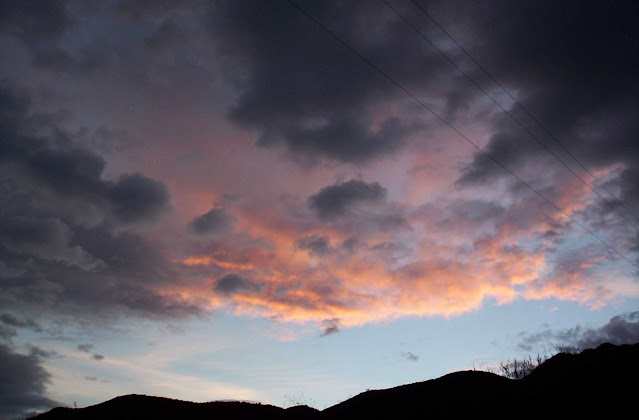
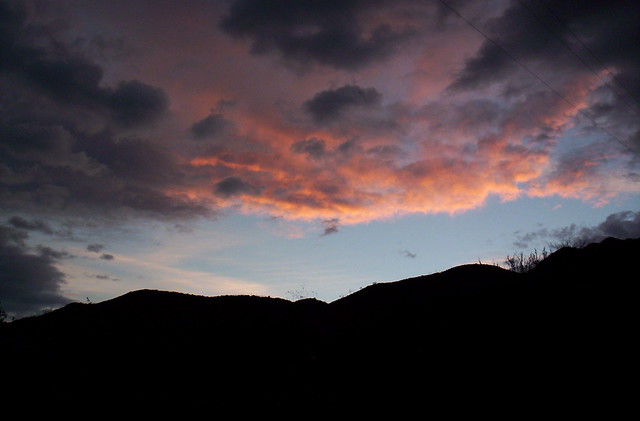
The sky over the valley that morning of 28 November 2005

Tropical Storm Delta, perhaps the most important weather episode in the Canary Islands took place on 28 November 2005. A tropical storm had not touched the archipelago, at least during the 20th and 21st centuries, if we consider that the episode of December 1975 was indeed not such a phenomenon. The erratic and unusual weather phenomenon left a trail of destruction on the islands, especially Tenerife. Tropical storm Delta, which caused one death and four injuries as it passed through the Canary Islands, leaving more than 200,000 subscribers without electricity in the metropolitan area of ​​Tenerife and considerable material damage to urban centres and agriculture. The strong winds, up to 200 kilometres per hour, also caused the closure of ports and airports. The storm also wrecked a small boat 400 kilometres south of the islands, with some 50 immigrants on board: six of them died and 12 disappeared. 

At Izaña (Montaña de Izaña at an elevation of 2,177 metres in the Teide National Park), gusts of wind that reached speeds of 248 Km/h, say it all.

Fortunately, the storm did not pass directly over the islands nor leave significant precipitation. The archipelago only suffered the scourge of the tail of the storm and did not face the power of the eye of the beast, but it still caused chaos.

Delta, as far as intense winds are concerned, mainly affected El Hierro from the first hours of the morning of the 28th (the only island that it did not take by surprise because, days before, its president of the Cabildo, at that time Tomás Padrón, had already warned that the storm was approaching, although he was ignored), to La Palma, late in the afternoon, and to Tenerife and Gran Canaria at nightfall and in the early hours of the morning of the 29th.

Geography played a determining role in the intensity of the winds. The INM report states that "the complex orography of the islands conditioned and modulated the local effects of the intense winds, reaching the appearance of hurricane-like gusts." Technician Juan José Bustos pointed to another cause: an anomalous intensification of the Delta before reaching the Canary Islands. “The Hurricane Centre even recognizes that it could reach the category of a hurricane, although it does not certify it. That meant that although when it arrived in the Canary Islands it had almost completed its extratropical transition, it still had enough intensity to produce those effects.

Efemérides meteorológicas en Canarias del siglo XX y XXI: Parte IV

Tuesday, 28 November 2006

One Year On: The Day That Delta Dawned

Delta Dawn
Dawn sky over Tenerife on Monday, November 28th, 2005.

Today is the first anniversary of Tropical Storm Delta that whipped through the Canary Islands on November 28th and 29th, 2005. Later denominated as an Extratropical Cyclone, though the precise distinction in terms is lost on the "ordinary folk" of these islands. Whatever it was, we remember it for the wake of damage it left, valued at $364+ million, with 7 deaths and 12 disappeared.

Delta was the worst storm that these islands have suffered and local media cannot help but comment on it again today and point out that residents in the Canary Islands still live with the fear that that something similar could happen again. The question, of course, is whether these islands are prepared.

Despite the alerts, nobody took it seriously enough and, for the most part, Delta took the Canary Islands almost completely by surprise. Some 200,000 people in Tenerife, the hardest hit, were left without electricity, a number were also without water and, some of those lacked these basic services for up to a week.

Many point to the lack of provision for such emergencies in the archipelago, remembering that most of the population was left without electricity at some point and that there were no generators on the islands to cope with the situation.

Many suffered damages and loss of electrical appliances, frozen food had to be thrown away, agriculture and business suffered huge financial losses.

Electric tower fallen. Photo: Mataparda

One of the most impacting images was that of the fallen electrical pylons, found to be in an "elevated" state of oxidation. Several towers were brought down by the high winds alongside the TF-1 motorway, causing chaos, not just with the electrical supply, but also with the traffic. Finally, yesterday, the parliamentary commission set up to investigate the response to Delta, decided unanimously, that responsibility for bad management falls jointly upon both central and Canary Islands administrations, as well as the electricity company, Unelco-Endesa, for the weaknesses in the Canarian electrical supply system.

Some are interpreting that decision as good news, but I think my friend Bernardo Sagastume at ABC gives us the best analysis on the subject, saying that, "those culpable ... are various and, at the same time, nobody." That was my reading of it too: the commission has been seen to have done it's job, just about, but it carefully avoided upsetting anyone in particular. That is hardly the way to make changes that will really improve the situation for the future.

In particular, the commission's report does recognize that the electrical pylons were in a poor state and only capable of half their designed capacity - for which Unelco was sanctioned - yet, the conclusions of the report fail attribute blame on Unelco for the resultant, prolonged, up to seven days, power outages in Tenerife.

Only the politicians themselves seem to be satisfied with the outcome and, as one would expect here, they also seem to have spent time arguing over what to call the storm, some claiming it was really a hurricane of force 3 or 4. 

Central to the issue, of course, is whether the storm should be termed "de fuerza mayor" - what English speaking insurers, even atheist ones, call an "Act of God" - because from that depends who (if anyone) will pay out to those affected.

Specifically too, the estimated damages reported earlier and mentioned in the reports at Wikipedia (English | Spanish), were all well in excess of $300 million (228 million euros at today's rate). Nevertheless, the commission has now valued the global damages caused by Delta at merely 41.7 million euros ($54.8 million).

As to the future, the new president of Unelco, José María Plans, says that energy distribution has improved from the "critical" state it was in a year ago, but the archipelago continues to require new power stations to diversify risks.

We all hope that there will never be another storm of the like of Delta in the Canary Islands, but merely hoping would be foolish in the extreme. Unfortunately, from these conclusions, Canary Islanders are still left merely hoping that what the authorities might do to prepare, if it does occur, is enough and in time.

Friday, 2 June 2006

Delta Was an Extratropical Cyclone

Delta 2005 track

According to the final report from the meteorologists, reported in La Opinion, what we have been calling Tropical Storm Delta, was actually an extratropical cyclone and the damage caused by the phenomenon was the fruit of the orography of the archipelago. We're glad to have that one cleared up, aren't we? But, unless you're an expert in these things, they may as well have said it was caused by extra-terrestrials. In other words, you may be wondering, as I was, what all those big words really mean, so I've done my best to make sense of this news.

The final technical report from the National Meteorological Institute (INM) on Delta concluded that it was, on its arrival in the Canary Islands, an extratropical cyclone and not a tropical storm as had been said at the beginning. They also say that the destruction caused in some parts of Tenerife and which left some areas without electricity for a week and without water for some days, was caused more by the physical geography of the island than by the weather system itself.

Researchers from the National Meteorological Institute presented their report last Tuesday at the Museum of Science and the Cosmos in La Laguna, Tenerife during a conference called Profundizando en Delta: un estudio avanzado (Getting to the bottom of Delta: an advanced study). During this chat, INM technicians made scientific data available for the first time, covering this phenomenon that wipped the island last November 29th.

The information was collated two or three months earlier and, despite its importance, had not been made public and was presented in a discrete conference.

During the presentation, Francisco Martín León, of INM, explained that at the beginning Delta was a tropical storm, with all the characteristics of one and was generated in subtropical waters. Between November 23 and 27, "it behaved like a tropical storm", explained Martín León and added that on November 28th at 12:00 hours, the National Hurricane Centre in Miami [the centre with jurisdiction over this type of phenomenon in the Atlantic] catalogued the phenomenon as a tropical storm. (Note: I expect this was also when they gave it a name.)

After that moment, a number of atmospheric circumstances came about together, which caused Delta to arrive in the Canary Islands and, the form in which it did, which was that it became an extratropical cyclone.

For a tropical storm to travel, it normally needs water with a warm temperature of 27 degrees centigrade. One of the first curiosities of Delta was that it developed over waters with temperatures inferior to 25 degrees and even water at 21 degrees. Also, Delta had a singular movement and was conducted over a course that brought it to Canary Islands latitudes and, it was precisely this course that prevented it from dying out in mid-Atlantic, as is usual with tropical storms.

Later, Delta evolved with a warm frontal system and with this injection of dry air, it began to displace rapidly, where before that, it had been moving slowly and erratically. On November 28th, Tropical Storm Delta began its transition to extratropical and lost its symmetry (another of the characteristics of tropical storms). On arrival in the Canary Islands on the night of November 28th, it had already converted into an extratropical cyclone.

Martín León assured, in turn, in response to questions, that a similar phenomenon to Delta had been produced in the Canary Islands in 1975 and that, with these two events, it is fitting to think that this is something which could be repeated in the islands.

Orography and Wind

Juan José Bustos, also from INM, explained that the grave destruction that was produced in the Canary Islands, especially on the islands of Tenerife and La Palma, had more relation with the physical geography of the terrain that with the weather system. That is, that in less mountainous islands, there were few problems reported. He also explained that the largest gusts of wind were on the leeward side (On or toward the side to which the wind is blowing. The side sheltered from the wind.), as in the case of the Valle de Güímar.

Javier Calvo explained that the various methods that exist at the moment to predict this type of phenomenon do not have the capacity to predict exactly what time they will arrive or the force of the winds they will bring with them.

Reference and Definitions

Orography: the physical geography of mountains and mountain ranges.

Cyclone: An atmospheric system characterized by the rapid inward circulation of air masses about a low-pressure center, usually accompanied by stormy, often destructive weather. Cyclones circulate counterclockwise in the Northern Hemisphere and clockwise in the Southern Hemisphere.

Extratropical Cyclone: The extratropical, or middle-latitude, cyclone originates as a wave, or perturbation, in the polar front separating the cold polar easterly winds from the warmer prevailing winds farther toward the equator.

Tropical cyclones, formed over warm tropical oceans, are not associated with fronts, as are the middle-latitude wave cyclones, nor are they as large as the latter. A tropical cyclone that has matured to a severe intensity is called a hurricane when it occurs in the Atlantic Ocean. Tropical cyclones usually move toward the west with the flow of the trade winds during their formative stages.

To be fair, the information on Tropical Storm Delta (2005) at Wikipedia (in English) reflects this information. The Spanish version contains more information, but, curiously, doesn't mention the extratropical word.

Report of the preliminary evaluation of the front, which explains how the lie of the land added to or caused the turbulence, causing the level of damages (in Spanish, but with ever so pretty pictures, diagrams and graphs.)

El informe final del Meteorológico dice que ´Delta´ fue un ciclón extratropical

Wednesday, 30 November 2005

Canary Islands After the Storm

El Dedo de Dios in Gran Canaria after the storm broke off it's top portion

Tropical storm, winter storm, hurricane ... the distinctions do not seem all that important when what one sees looks like a hurricane whipped through. Mudslides, missing roofs and trees, often hundreds of years old, have been uprooted all over the islands. Among many others, eight of the large trees on Santa Cruz', Avenida de Anaga, alongside the the capital's port have been uprooted and in the Plaza Weyler, the gardens have been totally destroyed. A sculpture by famous artist, the late Cesar Manrique, has been reduced to scrap metal in Lanzarote. 

In Gran Canaria, God lost his finger. "The famous Dedo de Dios (God's Finger), at Puerto de Las Nieves on Gran Canaria collapsed due to strong winds." The famous landmark stood for millions of years and was the symbol of the area.

Whilst it is sad that such things have been destroyed in one frenzied night and day, TV reports show carnage, but victims mostly dismissive of their material damages and grateful they had no lost lives to lament. Indeed, only one man died, on the Canary Islands themselves, as a direct result of the storm. The 63 year old was blown off his ladder while attempting to repair his roof in Fuerteventura.

Over 200,000 people in Santa Cruz and La Laguna in Tenerife spent a second night last night without power after pylons alongside Tenerife's main north-south highway were blown down. Local authorities are having equipment flown in from the mainland and expect to reconnect 40% of those without power today, 90% by tomorrow, Thursday and to have 100% power restored by Friday.

Over 40% of the mobile telephone network was affected, as well as thousands of fixed phone lines cut off. We were without internet connection and one of our TV stations was missing, probably due to a downed antenna. Hardly life-threatening.

The most lasting damage from the storm will be to the agricultural sector, which has suffered wholesale destruction of many crops throughout the archipelago.

Here in the north west of Tenerife, locally, at least, we were protected from the winds - which reached 200 kmph (124 mph) at Izaña, close to Mount Teide - by the Los Gigantes cliffs. Local damage is minor and restricted to small items that have been displaced. However, the roof of a new industrial building near the town of Buenavista del Norte was ripped off and in neighbouring Los Silos, the wall of a banana plantation fell on a vehicle belonging to the Local Police.

In Icod de los Vinos a row of houses had their roofs blown off, but the storm merely dampened the day's traditional festivities for San Andres.

Experts are unable to offer conclusive proof, but locals are convinced that global warming is responsible for the abnormal weather phenomenon. Those I've spoken to hope, but do not believe, that it will be an isolated incident.

The islands have now been taken off alert and schools and work are back to normal in almost all but the most affected areas of Santa Cruz and La Laguna.

BBC | Tropical storm batters Canaries

Tuesday, 29 November 2005

Storm Delta nears Canary Islands

The regional government declared a state of alert in the Canary Islands as Tropical Storm Delta (the 25th of the season) headed towards the archipelago. The fishing fleet was ordered to remain on dry land and citizens were advised to avoid travelling, especially on roads close to the coasts and, to take extra precaution on mountain and narrow roads where there is a heightened risk of falling trees or rocks.

Schools were closed Monday throughout the Canary Islands and several inter-island flights were cancelled, with others suffering delays as the first winds of Atlantic tropical storm Delta hit the archipelago. Keen to allay fears among the population who might be concerned about the risk of damage on a par with that caused by Wilma or Katrina, simply because this is a named storm, local TV presenters interviewed meteorologists on air via telephone link.
Presenter: "What is the difference between this and previous storms we've seen in the archipelago?"

Meteorologist: "The Hurricane Center in Miami gave it a name."
Not entirely sure how exactly that helps mind you. Meteorologists predicted wind speeds of between 75 and 100 kmph in the uplands of Tenerife and La Palma, possibly reaching 150 kmph or more on the summit of Mount Teide. Winds have continued to buffet Secret Tenerife's "headquarters" throughout Monday, but, so far, with less force than we have seen on previous occasions. Electricity supplies have been interrupted more than once, but we have decided to follow official advice to the letter and "avoid unnecessary trips". Lock up, wrap up and sit it out, is usually the best way to deal with these short lived weather fronts.

Situación de alerta ante los fuertes vientos y lluvias, preludio de la tormenta 'Delta' NASA image from Goddard Space Flight Center, Public domain