![]() |
| Streets in Santa Cruz de Tenerife Mstyslav Chernov, CC BY-SA 3.0 |
After more than 20 years, posts here will now only be occasional (see why) for big events such as Tenerife Carnaval, so please "Like" and follow our Facebook Page to get future updates.
Saturday, 10 September 2022
Brunch in Santa Cruz de Tenerife
Friday, 22 October 2021
Santa Cruz celebrates the bicentenary of its designation as the capital of Canary Islands
![]() |
| Tenerife Auditorium and the "twin towers" from Las Mesas park. Carlos SM Some rights reserved |
After this designation, between 1822 and 1927, Santa Cruz de Tenerife served as administrative head of the archipelago thanks to the efforts of José Murphy
The privilege of Villa Exenta and the titles of Muy Leal, Noble y Invicta (Very Loyal, Noble and Undefeated) granted by Carlos IV on August 28, 1803, six years after having defeated the British commanded by Rear Admiral Horacio Nelson, would be the origin of the subsequent aggrandizement of Santa Cruz de Santiago de Tenerife, since, when the first constitutional period arrived in 1812 it had already consolidated itself as the administrative head of all the islands, as most of the State administrations were established here.
The first triumph of Santa Cruz in favor of its capital rights - taken from no one, since there was no capital until then - occurred when the captain general of the Canary Islands, with residence in Santa Cruz, notified the political superior of the province that in article 3 of the Decree on the formation of the Electoral Boards, promulgated by the Cortes of Cádiz in 1812, it was stated “that the Captain General of the province was the President of the Electoral Board, if he was in the town ...”; For this reason, when the Cortes approved the establishment of the Electoral Board in Santa Cruz de Tenerife, when the elections of deputies to the Cortes were held on May 30, 1813, the Provincial Council settled in Santa Cruz, as the head of all the islands.
When, in 1820, the Constitution of 1812 was proclaimed again, the political chief returned to Santa Cruz, a new captain general was appointed, and elections were held for Cortes and the Deputation and, although the Extraordinary Cortes established in 1821 recommended that the Proposals from the Provincial Councils that had been created eight years ago, a Royal Decree of March 1821 named the heads of electoral parties to La Laguna, Granadilla, La Orotava and Garachico, with Santa Cruz depending on La Laguna. For this reason, when the aforementioned Royal Decree reached the Islands, the Santa Cruz City Council met in an extraordinary council and agreed to appeal it in the Cortes of Madrid, appointing Mr. José Murphy y Meade, attorney-in-fact (councillor).
Murphy, for fear of being arrested, moved to the Peninsula in a Swedish brig bound for Setúbal (Portugal), arriving in Madrid in mid-July and, although the Cortes were closed, managed to get to the king and to the Government the appeal in which it stated that the new designation of electoral parties could not be considered valid, since the Courts had recommended that the heads of electoral parties be the same as those proposed in 1812. The Government considered the appeal logical and, without waiting for the reopening of the Cortes, on August 8 modified its previous decision and, once again, the municipalities of Santa Cruz, La Laguna, La Orotava and Icod were head of the electoral party.
The negotiations were not easy for Murphy, as he was a commissioner of the Santa Cruz City Council who wanted to make a presentation before the Plenary of the Cortes, where he had no vote, and the Canarian deputies (Gomera) Echeverría and Cabeza preferred that the capital fall in La Laguna and Las Palmas; However, developing laborious "corridor diplomacy" in search of support, would achieve that when the parliamentary sessions were resumed, on October 1, 1821, he managed to present his most famous and important argument in the Spanish Parliament so that the capital of the Canary Islands was determined in Santa Cruz. “For a century, various authorities established their residence in Santa Cruz whose presence symbolized that the capital was the town in which they lived and, emanating from the Constitutional Regime, other Institutions were established, as a natural, simple and ordinary thing."
Many generations have naturally seen this order of things: that where the authorities were residing was naturally the capital. In Santa Cruz were: Political Superior Chief, Provincial Delegation, Captain General, Mayor, Court of Appeals, Superior Board of Health, and Post Office Administration. By contrast, Las Palmas only has the Territorial Court and a Cathedral.
On October 5, when the Commission in charge of discussing the issue of the capital of the Canary Islands met for the first time, there was only one document on the table to initiate deliberations: the draft decree in which the name of La Laguna appeared as the capital of the Archipelago. After numerous and heated interventions, the decision was reconsidered and, at the meeting on the second day, all the members of the table were ordered to have Murphy's presentation in their possession, so that, in the debate on the third day, the Committee did not approve the designation of La Laguna.
The Commission met again on the 18th, and after a score of interventions, replies and counter-replies, the deputies were inclined for the capital to be Santa Cruz, assessing the number of authorities and institutions that were already established in the city. In the fourth session, held on the 19th, the Commission stated: "By declaring the point sufficiently discussed, the Commission's opinion is approved: the capital will be Santa Cruz."
On October 22, 1821, Don José Murphy y Meade, informed his native city of the agreement that had just been taken in the Cortes:
“I have the satisfaction of communicating to V.S. Iltma, that the Extraordinary Courts, in session of the 19th of the current, have served to designate that Very Noble, Loyal and Invicta Villa, as Capital of the Canary Islands”.
This news, written in such a concise way, despite its enormous importance, was the fruit of the hard work of a man, undoubtedly the greatest Canarian politician of the nineteenth century, who, despite not being a deputy in the Cortes, knew how to function in that unknown and in some aspects hostile environment. For this reason, this tireless fighter, authentic and main architect of the single capital, has deserved the title of Political Father of Santa Cruz.
Three months later, on January 27, 1822, Fernando VII promulgated the Royal Decree establishing the division of Spanish territory into 52 provinces, it read: “Canarias (islands). Population: 215,108 souls.- Deputies: three.- Capital: Santa Cruz de Tenerife ”.
Santa Cruz would remain the sole capital of the Canary Islands until September 23, 1927, when the Government of the dictatorship of General Miguel Primo de Rivera decreed the division of the Archipelago into two provinces: Santa Cruz de Tenerife and Las Palmas.
Santa Cruz celebra hoy el bicentenario de su designación como capital de Canaria
Friday, 6 August 2021
Town Hall & Fiestas in Santa Cruz de Tenerife
![]() |
| Santa Cruz Town Hall Image: AtmanVictor, CC BY-SA 4.0 |
- Carnival of Santa Cruz de Tenerife the city is known internationally for it's carnival, usually in February/March and is the biggest event.
- Fiestas de Mayo: The city was founded on 3 May 1494 (Día de La Cruz). On 3 May the city is decorated with flowers, with religious processions, romerías, sports events and more.
- Fiestas del Carmen: Virgen del Carmen 16 July.
- 25 July: Santa Cruz celebrates Santiago Apóstol (patron of the city) and the defeat of Horatio Nelson who tried to invade the city in 1797.
Tuesday, 20 April 2021
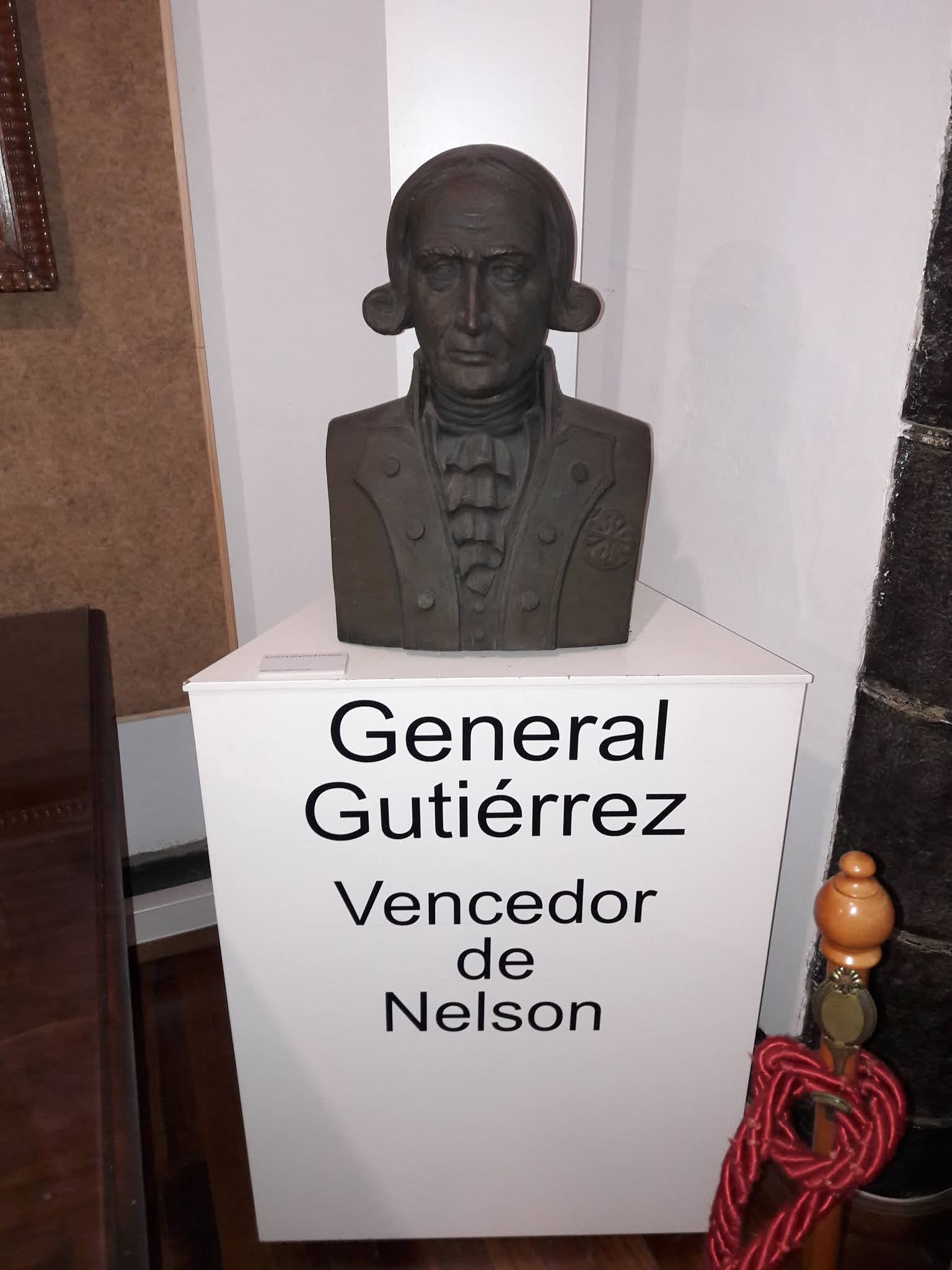
Military Museum, Santa Cruz de Tenerife
| Museo Histórico Militar de Canarias in the Fuerte de Almeyda Image: CARLOS TEIXIDOR CADENAS, CC BY-SA 3.0 |
![]() |
| Of course that's what parking spaces are for! |
![]() |
| Model ship. To be fair, not everything has an English label. |
![]() |
| Cannon "El Gato" (The Cat) |
![]() |
| This one's called "El Miserable". Wouldn't you be, if it hit you? |
![]() |
| The flag of the British frigate, "Emerald", it is said, was found at dawn on 25 July 1797, in one of the [British] launches tied up on the coast of Santa Cruz. |
![]() |
| General Gutiérrez Trouncer of Nelson |
![]() |
| Interior of the curved courtyard |
![]() |
![]() |
| Scale model depicting the Battle of Santa Cruz 1797 |
Tuesday, 6 April 2021
The wind sculpture by César Manrique
| The wind sculpture by César Manrique |
Tuesday, 30 March 2021
Guided Tour of the Auditorio de Tenerife
| Auditorio de Tenerife "Adán Martín" |
| Plaza de los Alisios / Trade Winds Plaza |
![]() |
| View from the balcony on the Auditorio. In the foreground (right) is the Castillo Negro, in the middle ground is the Parque Marítimo César Manrique and the hillock behind is the Palmetum: a botanical garden which has transformed a rubbish tip. A Paradise Built On Top Of A Landfill |
Last time I was in Santa Cruz, I accepted an invitation for a Guided Tour of the Auditorio de Tenerife, the emblematic building, designed by Spanish architect Santiago Calatrava. As I had my non-Spanish speaking husband with me, the lady who took us round - yes, just the two of us - explained everything in English. You do need to reserve in advance through details here.
Tuesday, 23 March 2021
Our Lady of Africa Market Santa Cruz
| Mercado de Nuestra Señora de África |
The Market of Our Lady of Africa is a building in Santa Cruz de Tenerife, popularly known as La Recova, of neo-colonial architectural style inaugurated in early 1944. The municipal market is located in this building. open from Monday to Saturday from 6am to 2pm and on every Sunday of the year from 7am to 2pm.
Sunday, 3 May 2020
The Crosses of Santa Cruz de Tenerife
![]() |
| Procesión de la Santa Cruz Fundacional Photo Jose Mesa Some Rights Reserved |
The official chronicler recalls the history of some of the oldest symbols of the capital of Tenerife, Santa Cruz (Holy Cross), which was founded in May of 1494.
Cruz De La Fundación (Foundation Cross)
![]() |
| Foundation Cross in the Iglesia de la Concepción in Santa Cruz de Tenerife. Koppchen / CC BY |
There, close to the seashore, at the source of the Plaza de la Iglesia, the cross would endure rain, sun and sea until, in 1745, the then mayor asked the bishop for permission to enthrone it in a chapel that he had built in the Placeta de la Cruz, called the Santo Sudario (Holy Shroud). [Sudar means 'to sweat': is this where we get the word sweatshirt from and is a hoodie an 'unholy shroud' therefore?]
In 1794, however, the bishop allowed the demolition of the aforementioned chapel for the expansion of the slaughterhouse, whose income belonged to the parish, so the cross was placed next to the door of the hermitage of San Telmo until, in 1850, the Dominican friar Lorenzo Siverio, valuing what that ancient symbol represented, transferred it to the chapel of the Hospital de Nuestra Señora de Los Desamparados - Hospital Civil (now Museum of Nature and Archeology).
![]() |
| Map of Santa Cruz in 1701 shows the then location of the Foundation Cross |
The inhabitants of Santa Cruz would not begin to feel great interest in the founding symbol until 1871, when then mayor, Emilio Serra y Ruz, had to initiate procedures so that its municipal ownership was recognised, since the parish didn't recognise the claims of the City Council; the Marina authorities alleged that it belonged to them, as San Telmo was the hermitage of the sailors; and the City Council of La Laguna also claimed it, claiming that it should be in its town hall, next to the civic banner, as it is a fundamental piece in the history of the island. Finally, on April 19, 1873, the Permanent Commission of the Deputation Provincial decided that the Cruz de la Conquista (Cross of the Conquest) belonged, in fact and by right, to the Municipality of Santa Cruz de Tenerife.
In 1892, seeing the lamentable state in which the venerated relic was found, the City Council agreed that it should be embedded in good wood and inserted into a reliquary of wood, nickel and glass, and that the coat of arms should be embossed on its upper part. Since then, its festivity began to be given an institutional character, and it remains in the Mother Church of La Concepción.
Cruz De Montañés (Montañés' Cross)
![]() |
| The Cruz de Montañés in the Plaza de la Pila (now Plaza de la Candelaria) in Santa Cruz de Tenerife |
The cross was placed in the upper part of the Plaza de la Pila (La Candelaria), on a tiered pedestal of the same material. At its base it read: “At the devotion and expense of Mr. Bartolomé Antonio Montañés, captain of strangers and trustee-representative of this port of Santa Cruz de Tenerife. Year of 1759 ”.
When the remodeling of the aforementioned plaza, then called La Constitución, was carried out in 1929, the marble cross was transferred to the Plaza de San Telmo, in the El Cabo neighborhood. With the opening of Calle Bravo Murillo and the consequent disappearance of Plaza de San Telmo, this sacred symbol would end up in its current location, next to the parish church of La Concepción, in the Plaza de la Iglesia, in a landscaped space, surrounded by a metal fence. There are those who consider that the Cruz de Montañés should return to its original place, in the Plaza de la Candelaria.
Cruz De San Agustín (Saint Augustin's Cross)
The Augustinian friars who accompanied the Castilians in 1494, established a hospice on the outskirts of the town, current Puerta Canseco and San Francisco de Paula streets, moving in 1744 to a wasteland in Toscal, located on the Camino Real that went to Paso Alto, where they founded a hospice, placing a large wooden cross on its facade to mark it.
What in principle was a humble foundation, soon acquired some relevance, receiving the support of the residents; for this reason, when in 1767 a Royal Provision abolished the hospice and the friars left for the convent that the Order had in La Laguna, the Cross was kept in a nearby place, being known as the Cruz de San Agustín neighborhood, where its residents on May 2 and 3, organized a very popular popular festival in which there were dances and nougat stands.
In 1908, the historian Felipe Miguel Poggi y Borsotto, on behalf of the neighborhood commission, asked the City Council to transfer a small plot to build a sanctuary for the Cruz de San Agustín, but the Commander of Engineers, Tomás Clavijo y Castillo, who had built his house on the site resulting from the demolition of the hospice, opposed it, because the said chapel would take away his enviable view of the bay.
When the Rodríguez López family built their mansion in the current street of La Marina nº 57, the cross went to the municipal warehouses, from where it was rescued by the Luz y Vida Association, in the neighborhood of El Toscal, and placed in a beautiful garden, very close to its original location, located at the confluence of the streets of La Marina and San Francisco, overlooking the gazebo of the architect Marrero Regalado.
Cruz Verde (Green Cross)
Another historic cross survives in the city, which gives its name to Calle de la Cruz Verde, also known as Calle de las Tiendas (Street of the Shops), because in the 17th and 18th centuries it brought together most of Santa Cruz's commerce. Although this cross is related to Nelson's attack in 1797, since in that area fierce street fights took place in which the Tenerife militiamen harassed the English troops who had managed to disembark and were forced to take refuge in the nearby Dominican convent of La Consolación, current Guimerá Theater, and when the civic procession of July 25 arrived in front of the cross, the councilor who carried the banner of the City Council bowed in memory of the Tenerife defenders killed in that attempt, it is documented that in 1761 there was already a green cross, whose origin could be related to the stops that were made during the Via Crucis on Good Friday, between the parish of Our Lady of La Concepción and the church of San Francisco. The aforementioned wooden cross, painted green, was replaced by a marble one.
![]() |
| Tram stop at Cruz del Señor. Image: Josemarear / CC BY |
Cruz Del Señor (The Lord's Cross)
At the confluence of the roads of San Sebastián (current Avenida de Bélgica) and the La Laguna road (Avda. Islas Canarias), in 1754 a cross was placed as a resting place for the funeral processions on their way to the cemetery, as it was customary that the coffin be carried on the shoulders from the deceased's home. It allowed time to say a prayer as well as to catch the breath and regain strength to continue the journey. In 1940, when the parish was created, the popular devotion to this humble cross was so strong in the neighborhood that the name prevailed over the official one of Santa Cruz and, it became the church of the Cruz del Señor (Cross of the Lord), in remembrance of it's origin.
Cruz De Santiago (St James' Cross)
![]() |
| Coat of Arms of Santa Cruz de Tenerife. Image: Heralder / CC BY-SA |
As the Apostle is also the patron saint of the Cavalry, in 1968, the Captain of the Corps, Fernando Zerolo Davidson, had the initiative of making an 8-meter-tall Santiago Cross, made of galvanized steel and surrounded by a luminous thread, placing it on the high cliff, on the La Montaña de Altura de Paso Alto (Paso Alto mountain) in the Barrio de la Alegría. The monument was made and assembled by the soldiers who were taking the Professional Promotion course at the Regiment of Engineers in La Cuesta. The Port Authority of Santa Cruz de Tenerife is in charge of carrying out its maintenance, and thanks to its lighting, residents and walkers can remember this historical legacy of the Tenerife capital and it is a reference to the passengers of the ships that visit.
Las cruces de Santa Cruz de Tenerife
![]() |
| Santa Cruz de Tenerife north dock with the Montaña de Paso Alto (right). Image: CARLOS TEIXIDOR CADENAS / CC BY-SA |
Thursday, 11 July 2019
Where to Park in Santa Cruz de Tenerife
![]() |
| Aparcamiento del Intercambiador Santa Cruz de Tenerife Image by Jose Mesa Some rights reserved |
Traffic in Santa Cruz de Tenerife has always been one of the main problems for those who visit the capital, either for work or leisure, but more than the density of vehicles, the lack of parking is the real headache for drivers in this area of the island. Exploding prices too make grown people tremble each time they come to the city. Fortunately, there are car parks where you can park in Santa Cruz without the need to donate a kidney [to pay for it] or, in the best case, free.
1. Parking Santa Rosalía
Located in the central street of Santa Rosalia, number 87, very close to the Plaza del Parque Bulevar (Shopping Centre). The first hour of parking costs 1.45 euros, while the remaining hours cost 1.50 euros. 10.90 euros is the full day rate.
2. Parking Intercambiador (Transport Interchange - Bus & Tram Hub)
Located on Víctor Zurita Soler Avenue, this car park is open 24 hours every day with cheaper rates during the weekend. Parking for one hour costs 1.50 euros, while on Saturdays and Sundays it's only 0.75 euros. Full day is 15 euros.
3. Aparcamientos del Centro Comercial Nivaria
The parking areas of this shopping precinct, located on Tres de Mayo Avenue, are completely free for the first two hours, regardless of whether customers spend or not on the premises. From the third hour, the rate is three cents per minute (1.80 euros per hour).
4. Aparcamientos del Centro Comercial Meridiano
The Meridiano Shopping Center, located on Avenida Manuel Hermoso Rojas, has free parking open to the public during its opening hours. However, in recent weeks it has been reported that this car park could cease to be free or become only free for customers.
Friday, 3 May 2019
Santa Cruz: 525 anniversary of the city and 129 years of the Fiestas de Mayo
![]() |
| Alonso Fernández de Lugo founded the city of Santa Cruz de Tenerife. |
On May 3, 1494, the Castilian conquerors nailed a rudimentary wooden cross on the beach of Añazo with which they celebrated the mass that commemorated the founding of the Port and Place of Santa Cruz. The Cross remained in the same place for many years, where, forgotten by some, and abandoned to their fate by others, it endured rain, sun and seas.
When in 1735 the Logman brothers (priests) built a house to install a butchers shop in it, so that the income would help the poor resources of the first church (Concepción), the Cross was wedged between the aforementioned house and the wall that served as a defensive parapet. Therefore, in 1745, the mayor Juan de Arauz y Lordelo, observing the state of deterioration and abandonment of the Cross, ordered them to build a chapel so that it would be sheltered, being called the chapel of the Holy Cross or the Holy Shroud. From this date (1745), every May 3 they began to celebrate this holiday every year.
When the aforementioned chapel was demolished, the Franciscan friars placed the Cross next to the door of the hermitage of San Telmo, where it was forgotten by those who did not know its history and by the indifference of those who, even knowing it, were not aware of its value. It would be in 1850 when the chaplain of the Hospital de los Desamparados, the Dominican Lorenzo Siverio, assessing what that ancient symbol represented for the population, made the decision to move it to the hospital chapel, while exclaiming: "Nobody pays attention today to this old relic, but the day will come when everyone will dispute it."
Little by little, the inhabitants of the port of Santa Cruz began to understand what that old relic represented for the city and began to feel great interest in the founding of its history. The first civic procession of the Foundational Cross took place in 1867. It left the chapel of the Hospital de los Desamparados, where it was deposited, and, after touring the decorated streets of the neighborhood, it reached the hermitage of San Telmo. It was accompanied by the Banner of the City, which was followed by the Municipal Corporation, civil governor, the military band, and a picket line of the battalion. The Banner was new and had been made in Seville with all the details that the previous one lacked.
That day, the Municipal Corporation used, for the first time, a medal hanging from its neck, on a ribbon with national colors. These medals, made in Paris, in gilt silver, had the motto: "Constitutional City Hall of Santa Cruz de Tenerife". The R.O. who authorized it said: "The will of S.M. (His Majesty) is that the use of this badge is limited to solemn acts in which the City Council is to be included in a corporation, and not those that are individually celebrated by the councilors ".
During the first five days of the month of May of that year there were several festivities: regattas of boats, cockfights, balloons, races on horseback. At night there was strolling and music in the square and fireworks. Booths were also installed in the Plaza de la Constitución (La Candelaria), beautifully decorated and illuminated, since all the lanterns were lit, even if there was a full moon.
Finally, on April 19, 1873, the Provincial Commission reported that the Cross of the Conquest belonged in fact and of right to the Municipality, authorizing to collect for its custody all the ornaments that belonged to it.
In the hermitage of San Telmo, said: "The Cross of the Conquest, made of wood from time immemorial, is next to the Gospel, inside a wooden urn with crystals, and has a shroud of white taffeta. Two Chinese vases with golden fillets and fourteen different coloured glass lanterns are used for the decoration."
On May 2, the Cross was moved to the church of San Francisco, where it was guarded until the 3rd, when the ceremony took place and then the procession through the streets of the city centre, accompanied by the entire Municipal Corporation and people from all points of the island. The procession was described by the media as a great spectacle. As agreed, the Cross was kept in San Telmo and, from here, on its May festivity, it went out in procession through the ornate streets of the neighbourhood until arriving at La Concepción.
The first May Festivities were celebrated in 1890. They lasted three days and the animation was extraordinary. There was a mass in the Plaza de San Telmo, in commemoration of the first one that was said in the same place and before the same Cross, which was attended by all the troops of the garrison, the provincial guard and the sailors of the cruise Island of Cuba, anchored in the port, and at night there was a military retreat that travelled the main streets. In addition, a dance was held at the Casino, a literary-musical evening in the Instructive Cabinet, and a retinue of allegorical figures, carried out by beautiful young ladies from the Circle of Friends who wore fancy costumes.
![]() |
| Foundational Cross Koppchen [CC BY 3.0] |
In 1896, the Foundation Cross was transferred to the mother church of La Concepción, where it remains today. In 1909, Patricio Estévanez promoted a campaign, in the newspaper El Progreso, to promote the Fiestas de Mayo. That year the program of events was more extensive than ever, because there were two weeks of acts and rejoicings of all kinds. As of that year, the exhibition of Canarian flowers and plants and crafts, the decorated crosses contest and the baile de magos (country ball), among other events, have traditionally been held.
Santa Cruz: 525 aniversario de la ciudad y 129 de las Fiestas de Mayo
Tuesday, 23 April 2019
Plaza de los Patos, Santa Cruz de Tenerife
![]() |
| Frog on the fountain, Plaza de los Patos, Santa Cruz de Tenerife |
The famous Plaza de los Patos (Ducks Square), in the so-called Barrio de los Hoteles (Hotels District), described as the Sweetest Square in Santa Cruz merits a visit. It's real name is the Plaza de 25 de Julio, so named after the failed attack on Santa Cruz on that date in 1797 by Admiral Horatio Nelson.
La reforma de la Plaza de los Patos
The plaza, built between 1913 and 1917, a symbol of Santa Cruz and an important part of the city's heritage, was reopened after refurbishment last year. The fountain has figures of eight frogs that surround the central goose. The most outstanding feature of the square, in addition to the central fountain, are the 20 benches, covered in ceramic tiles from Triana (Seville), bearing the names the companies who sponsored the construction of the Plaza.
![]() |
| Plaza de los Patos in 1920 [Public domain], via Wikimedia Commons |
From here, it's well worth taking a stroll north on the Avenida de Veinticinco de Julio (25th July Avenue - there's a bit of a theme here - to where the avenue crosses the Rambla de Santa Cruz at the corner of the Parque García Sanabria and stop at the Kiosco Numancia. Apparently, it has a reputation for being expensive (we didn't notice), but has such an interesting position right in the middle of the street where you can watch the world pass by on either side, with the tranquillity of the park next to it. A perfect coffee stop in a city.
![]() |
| Central goose in the central fountain |
![]() |
| The central fountain clad in the tiles from Tiriana (Seveille) |
![]() |
| Bench with advertising for one of the plaza's sponsors |
![]() |
| Another sponsor's bench for Three Steamers Safety Matches |
![]() |
| Bench advertising sponsor, Suchard Chocolate |
Plaza de los Patos - Santa Cruz de Tenerife