The most detailed English language website on the island

Weather - Tutiempo.net
     

After more than 20 years, posts here will now only be occasional (see why) for big events such as Tenerife Carnaval, so please "Like" and follow our Facebook Page to get future updates.

Showing posts with label Tenerife Weather. Show all posts

Saturday, 30 July 2022

Record-breaking heatwave in July 2007

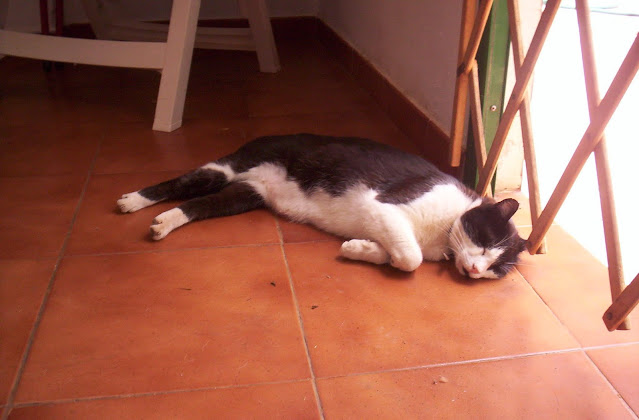
30 July 2007, so hot the cats are melting into the tiled floors once again

On 30 July 2007, a heatwave coincided with serious forest fires in Tenerife (as a result of which we were evacuated the next day) and Gran Canaria. The absolute historical maximum recorded in Gran Canaria was produced: 46.5ºC in Agaete. The average temperature for the period was 30.9ºC, about 8ºC above the average for the month. Also on the same day, the absolute maximum temperature record was broken at La Palma airport, of 38.4 C.

Friday, 29 July 2022

Canary Islands endure July 2004 heatwave

25 Jul 2004, one of the cats trying to keep cool in the intense heatwave

The action of hot winds from Africa enveloped the Canary Islands in an infernal bubble between July 22 and 28, 2004. Scorching sun, calima and, above all, torrid air, were the conditions that the islands had to endure during five suffocating summer days. Thermometers reached unprecedented record temperatures, not seen in decades. The warm air shot temperatures up to 43 degrees in the shade in midland areas. The two Canary Islands' capitals were not spared from the heatwave either: Santa Cruz de Tenerife reached 41º and Las Palmas de Gran Canaria 40º. In Lanzarote it reached 43.5º and in no island, except El Hierro, did it drop below 40º during the central hours of the day. The Ministry of Health confirmed the death of 12 elderly people and a 55-year-old man due to the heat wave, the most intense since the Territorial Meteorological Centre was established.

Seven of the deaths occurred in Gran Canaria, four in Tenerife, one in Lanzarote and one in La Palma. Some 113 people required attention in hospital centres (84 in Tenerife and 49 in Gran Canaria), 30 people were admitted with dehydration symptoms. More than sixty thousand farmyard animals, including chickens, chickens and rabbits, died of suffocation on farms. Sleeping was difficult, since night temperatures did not drop below 30 degrees, the hottest record since August 1961, according to statistics from the National Institute of Meteorology. The mountains of Tenerife, La Palma and Gran Canaria suffered forest fires, although the twelve outbreaks declared in five days were quickly controlled.

Electricity consumption increased 9% and water consumption 50%, reported Unelco and Enmasa, respectively. Sales of air conditioners and fans increased tenfold in large stores, until stocks were exhausted in just four days. The trade winds on Thursday 29 brought a cooling of the atmosphere and the islands returned to their usual spring-like climate.

Saturday, 16 April 2022

April 2003 storm with 8 meter waves caused damage in Garachico and Puerto de la Cruz

A little stone that washed up in Garachico in a storm

The storm on 15 April 2003 was due to a deep storm with high pressure gradients that descended towards the Canary Islands along with strong winds from the north west. The waves produced by winds that originated the storm, then becoming a background swell, with waves of up to 8 meters in height, caused great damage in Garachico and Puerto de la Cruz. A storm of this magnitude had not occurred since January 1987.

Efemérides meteorológicas en Canarias del siglo XX y XXI

Wednesday, 13 April 2022

Easter Week Flooding in La Laguna in 1977

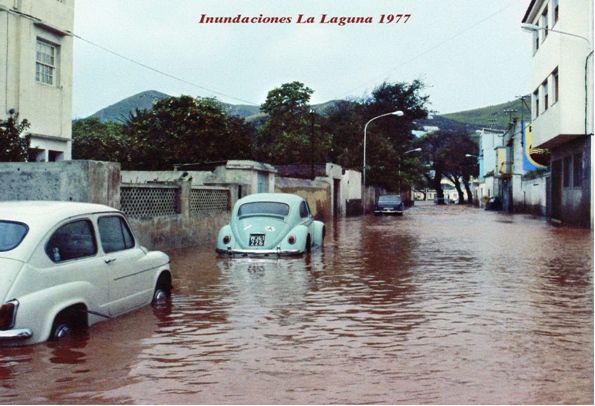
Flooding in La Laguna in 1977

Between 10 and 13 April 1977 there was an intense rainy episode, lasting several days in the Canary Islands that left precipitation of more than 350 l / m2 in the south west and of more than 220 l / m2 in the south east of Tenerife. 

San Cristóbal de La Laguna was partially incommunicado for several days due to this Easter flooding. The powerful SW storm of Holy Week of 1977 is one of the most important storms of the 20th century in the Canary Islands. It affected the entire western province and Gran Canaria, but was especially virulent in Tenerife, with 358.9 mm in Vilaflor on 11 April; 260.3mm at Los Rodeos on 10 April. 

In El Escobonal (Güímar), also in Tenerife, more than 400 mm of rain fell during just this storm, when its annual average is around 380 mm. It caught everyone off guard with their mind still on the recent Los Rodeos accident.

Thursday, 31 March 2022

31-M: The day it rained a whole year's worth in two and a half hours and claimed 8 lives

On 31 March 2002 - referred to as 31-M - the highest rainfall recorded in Santa Cruz for at least 70 years - caused the Riada de Tenerife de 2002 (Tenerife flood of 2002). 

The Riada de Santa Cruz de Tenerife was a severe convective storm, anchored in Anaga. Teide and the Cordillera Dorsal (Dorsal mountain range) acted as an obstacle to the winds from the south west and the Macizo de Anaga (Anaga massif) channelled them to the La Laguna-Santa Cruz area. This would be the triggering factor for the convergences that formed in the area. March 31, 2002 fell on a Sunday, but it was not just any Sunday, but the last of the Easter weekend, paradoxically Resurrection Sunday. Perhaps that was the reason why the tragedy only (!?) claimed 8 fatalities. 

In the early afternoon of Sunday, March 31, 2002, it began to rain over Santa Cruz de Tenerife. What at first was apparently normal rain turned, in a few minutes, into a spectacular downpour over the capital of Tenerife. Up to 224 litres per square meter fell in two and a half hours, according to the National Institute of Meteorology. The streets were transformed into rivers that dragged cars, stones and, unfortunately, people. The flood, caused by the cumulonimbus storm, claimed eight lives. 

The last victim was located a week later on the El Médano coast, ten miles from the shore, after having disappeared in San Andrés (65 kilometers to the north). The storm disfigured the city from top to bottom. The damage was extensive, especially in the neighborhoods of La Alegría, Valleseco, María Jiménez (El Bufadero), Cueva Bermeja, San Andrés, Igueste de San Andrés and Ifara. More than 500 people were evacuated and had to spend the night at the Fairs and Congress Centre. There were 30 injured, 700 houses destroyed, 500 premises affected and a thousand vehicles damaged. 60,000 schoolchildren were left without classes for several days. 

A first evaluation determined that the damage exceeded 90 million euros; 80% of the city was left without electricity and almost half without water. The storm caused the collapse of the emergency services, to the point that 112 was cut off for a couple of hours. One hundred thousand telephone lines were cut. Radio, through emergency generators, was the only means of communication. Yet, at the time of the catastrophe, the sun was shining in the north and south of the island.

The Canarian Government decreed three days of official mourning and the Santa Cruz City Council, chaired by Miguel Zerolo, suspended the May Festivities. The State Government urgently approved aid for the victims. Six days after the tragedy, the Cabildo handed over 2,000 euros to each affected family. Later, more aid would arrive from the Santa Cruz City Council and from the island corporation itself. 

One month after the event, King Juan Carlos visited the most affected areas, meeting the relatives of those that died in the floods.

(Source: Stories of the Canary Islands, Juan Carlos Mateu / María Doménech)

Bust in Santa Cruz that remembers the victims of the flood. The sculpture "Person looking to the horizon" was created by the architect Felipe Hodgson Ravina, born in 1951 in Santa Cruz. It is located at Rambla de Santa Cruz and Avenida Francisco La Roche. Image: Felipe Hodgson, CC BY 3.0

Thursday, 20 January 2022

Largest known snowfall on January 20, 1979

The largest known snowfall occurred on January 20, 1979

The second fortnight of January 1979 was a carousel of fronts and squalls from the west and southwest with intense rainfall in the archipelago. In the centre of Gran Canaria, in the Barranco del Gofio, Tejeda, a man was dragged by the floodwaters, causing his death. The Port of Los Cristianos in the south of Tenerife was totally destroyed by the storm. The town of Santa Cruz de Tenerife was flooded when the Santos ravine overflowed. 

The largest known snowfall occurred on January 20, 1979, on the summits of Tenerife, Gran Canaria, and La Palma. In Tenerife, above 1,000 m, reaching in some points up to 5 meters thick. In Izaña 957 l / m² accumulated, almost all in the form of snow. That month up to 15 days of snowfall were registered. 

Saturday, 15 January 2022

Hurricane-force winds in Tenerife caused several deaths and heavy losses in 1953

Aerial view of the Parish of Our Lady of the Conception of La Orotava
Museo de Arte Sacro El Tesoro de la Concepción, CC BY-SA 4.0

On 15 January 1953 there was a storm with heavy rain and high winds in Tenerife. Hurricane-force winds hit the island and caused considerable damage in the east of the island, specifically in Guimar where the gale attacked with the greatest force. Entire farms were razed by the storm in La Orotava, causing losses of one billion pesetas. In Perdoma (La Orotava) an old woman lost her life and also her little granddaughter. In the parish church there were damages, in the Concepción and in other temples and buildings, and in many houses their windows and doors were damaged. Entire trees were uprooted falling on the roads, especially in the north of the island. In the south of Tenerife, the motorised sailing boat “Breñusca” sank near Las Galletas beach with a loss of six lives. 

Efemérides meteorológicas en Canarias del siglo XX y XXI

Saturday, 8 January 2022

Mythical storm of January 1999

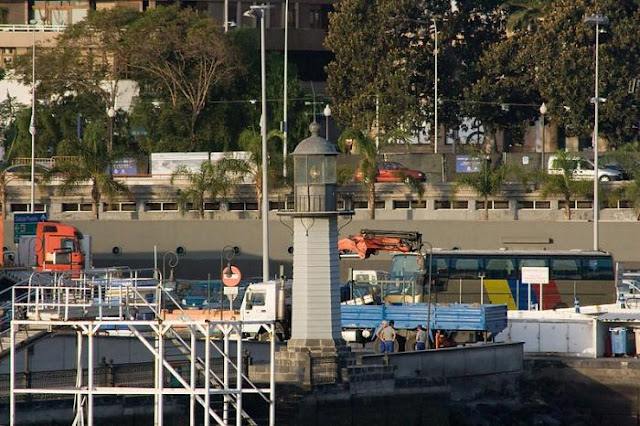
Santa Cruz de Tenerife Muelle Sur Lighthouse

On January 1, 1999, a storm began, accompanied by intense rains and whose negative effects lasted until the 8th. These affected both Canary Island provinces, but were intensely focused on Santa Cruz de Tenerife, where hurricane-force winds reached speeds of 100 km / h and the rains of 112 litres of rain per m2. There was damage to the infrastructure of the electricity company that caused cuts in the electricity supply and serious damage to the company's facilities, whose losses amounted to almost five million euros.

On January 6 and 7, 1999, a strong eastern storm brought huge waves to Santa Cruz and the rest of the archipelago that destroyed many port infrastructures. In Santa Cruz, the Paseo de San Andrés, a large part of the Muelle Sur (South Pier), the pier of the Faculty of Marine Sciences, the Sailing School and the Maritime Park were all destroyed. It also seriously affected Avenida de San Andrés. After the episode in the east came another from the north that brought cold, snow and an unusual hailstorm that gave the streets of San Cristóbal de La Laguna and Santa Cruz de Tenerife the appearance of snowfalls.

Sunday, 19 December 2021

December 2005 storm claims one victim

Even our usually bone dry barranco was still running on 20 December 2005

On December 19, 2005 and when the inhabitants of Tenerife had not yet recovered from the serious consequences that Tropical Storm Delta had left, there was a new episode of intense rains on this island that, together with strong winds, left a mortal victim: a woman, resident in the municipality of Granadilla de Abona, when she accidentally fell into the Fañabe ravine and was swept away by the flood. This storm also left other material damage, such as: the TF-1 highway cut due to the flooding of the highway and cancellation of flights at Reina Sofía airport, which had to be diverted to Los Rodeos and Gran Canaria airports. 

Efemérides meteorológicas en Canarias del siglo XX y XXI

Tuesday, 14 December 2021

Tropical Storm in Tenerife in December 1975

Puerto de la Cruz in 1975

On December 14, 1975, a very strong windstorm occurred throughout the archipelago. Although not officially recognized by the Florida National Hurricane Centre, it's possible that its origin was in tropical depression TS2. In Santa Cruz de Tenerife there were gusts of wind of 162 km / h, and, at Izaña a maximum gust of 216 km / h was recorded. This would very likely have been a record, it it hadn't been for Tropical Storm Delta in 2005.

From an excerpt from the newspaper El Día in 1975, we learn: Those who experienced that event first hand said that the buildings vibrated with the storm and, even, in the Ofra neighbourhood, residents abandoned their flats to take refuge in hallways for fear of collapse. At eleven o'clock on December 14, the electricity disappeared and Tenerife was left in the dark. "The firefighters worked from ten at night until late in the morning to remove blocks, glass and trees that hindered traffic in the interior of Santa Cruz".

The Atlantic Broadcasting Centre of Radiotelevisión Española stopped broadcasting its signal in a wide radius of the Tenerife capital. "The city woke up with collapsed electrical and telephone cables, as well as being carpeted with flowerpots, plants and trees that began to be removed in the early hours of Monday morning," it was reported in a copy of EL DÍA, which at that time cost eight pesetas. 

They were different times: In the palace of La Zarzuela, Juan Carlos I met with the Council of Ministers twenty-five days after Franco's death. In November 1975 adverts offered one-week cruises through Mauritania at 12,800 pesetas, a Mini at 125,000 pesetas or spacious apartments with a garage in the Simón Bolívar area for 1,950,000 pesetas.

In clinics and the general hospital, several people had to be assisted, with minor injuries.

In the port of the capital, the container ship "Frank Pais" had to be assisted by a tugboat due to the danger that it would collide with other ships after breaking its moorings; The circus tent installed in the Polígono de los Reyes Católicos jumped into the air; at Los Rodeos, La Palma and El Hierro all flights were suspended due to the adverse weather conditions; the plastics in the greenhouses were ripped ...

Efemérides meteorológicas en Canarias del siglo XX y XXI

Friday, 10 December 2021

The Canary Islands registered the fourteenth coldest month of November since 1961

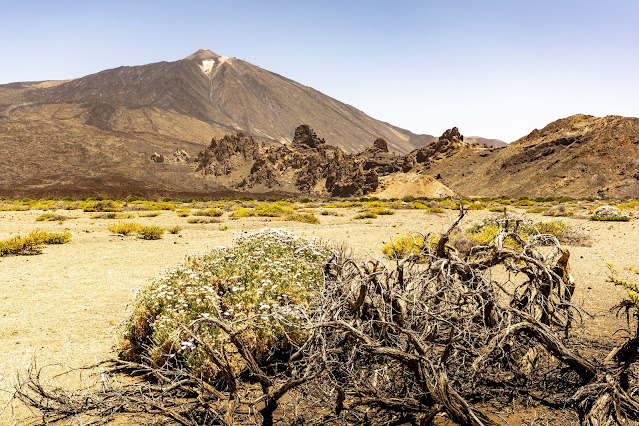
What better than a picture of the desert when we're talking about [relative] cold?

The Canary Islands have registered the fourteenth coldest November since 1961 (which is such as weird number to make 'news' of that it was irresistible), at the same level as those of 2005 and 1971, with a negative anomaly in the average temperatures of -0.9 ºC, more accentuated in the eastern islands.

According to the climate information from State Meteorological Agency (AEMET) the pluviometric behaviour (rainfall), both at the regional level and in the western islands, was dry and very dry in the eastern islands and the rainfall, divided into two episodes, contributed just 54% of the expected amount. 

Tenerife North and La Palma airports were notably deficient in hours of sunshine.

At 10 meters from the surface, the wind blew with less force than usual and in the maritime zone of the Canary Islands there were no anomalies in the temperature of the sea surface water, which was very close to the average values.

Sunday, 28 November 2021

Anniversary of Tropical Storm Delta

The sky over the valley that morning of 28 November 2005

Tropical Storm Delta, perhaps the most important weather episode in the Canary Islands took place on 28 November 2005. A tropical storm had not touched the archipelago, at least during the 20th and 21st centuries, if we consider that the episode of December 1975 was indeed not such a phenomenon. The erratic and unusual weather phenomenon left a trail of destruction on the islands, especially Tenerife. Tropical storm Delta, which caused one death and four injuries as it passed through the Canary Islands, leaving more than 200,000 subscribers without electricity in the metropolitan area of ​​Tenerife and considerable material damage to urban centres and agriculture. The strong winds, up to 200 kilometres per hour, also caused the closure of ports and airports. The storm also wrecked a small boat 400 kilometres south of the islands, with some 50 immigrants on board: six of them died and 12 disappeared. 

At Izaña (Montaña de Izaña at an elevation of 2,177 metres in the Teide National Park), gusts of wind that reached speeds of 248 Km/h, say it all.

Fortunately, the storm did not pass directly over the islands nor leave significant precipitation. The archipelago only suffered the scourge of the tail of the storm and did not face the power of the eye of the beast, but it still caused chaos.

Delta, as far as intense winds are concerned, mainly affected El Hierro from the first hours of the morning of the 28th (the only island that it did not take by surprise because, days before, its president of the Cabildo, at that time Tomás Padrón, had already warned that the storm was approaching, although he was ignored), to La Palma, late in the afternoon, and to Tenerife and Gran Canaria at nightfall and in the early hours of the morning of the 29th.

Geography played a determining role in the intensity of the winds. The INM report states that "the complex orography of the islands conditioned and modulated the local effects of the intense winds, reaching the appearance of hurricane-like gusts." Technician Juan José Bustos pointed to another cause: an anomalous intensification of the Delta before reaching the Canary Islands. “The Hurricane Centre even recognizes that it could reach the category of a hurricane, although it does not certify it. That meant that although when it arrived in the Canary Islands it had almost completed its extratropical transition, it still had enough intensity to produce those effects.

Efemérides meteorológicas en Canarias del siglo XX y XXI: Parte IV

Wednesday, 24 November 2021

Floods in the Canary Islands in 1968

Castle and area of San Felipe in Puerto de la Cruz
Oliver Abels, CC BY-SA 4.0, via Wikimedia Commons

In the floods of 24 November 1968, the most affected islands were those of El Hierro, La Gomera, Tenerife and Gran Canaria. Through the Barranco de Las Goteras, in the east of Gran Canaria, the water ran after 20 years of total inactivity, and in the Guiniguada, the waters reached two meters in height as it passed through Las Palmas de Gran Canaria. Likewise, the rains collected on the peaks caused the Caidero La Niña and Parralillo dams to overflow. 

But the town that suffered the greatest human and material damage was Puerto de la Cruz, in the north of Tenerife, since strong winds that descended down the slope were added to the intense rains, which at times acquired the character of torrential, from the summit towards the La Orotava valley. 

The flood in Puerto de La Cruz destroyed 40 homes, most of them on the banks of the San Felipe ravine. One person died. There was much damage in northern municipalities, with flooded streets and houses, blocked roads, landslides and power cuts. Access to Punta Brava was cut off, part of the Calzada de Martiánez and the Puerto de la Cruz beaches were under water.

In Gran Canaria, winds of 118 k per hour, a strong swell and a southerly storm were the causes that, on November 25, 1968, two ships anchored in the port broke their moorings and ended up at Las Alcaravaneras. The small boat, Dumbo and her companion Kallipateira, could not escape the fury of the sea on that winter night, where the first ended up on the shore of the capital's beach and the second, of Greek nationality, trapped in the reef. 

Efemérides meteorológicas en Canarias del siglo XX y XXI

(The video below shows flooding in the San Felipe ravine in 2009.)

Tuesday, 13 April 2021

April brings heavy rain storms in Tenerife

Hamlet of Las Lagunetas (Buenavista del Norte, Tenerife)

Storm in 1901 caused eight deaths in Tenerife

The rain and wind, accompanied by a strong electrical storm, hit various towns in Tenerife between April 10 and 14, in 1901, causing eight deaths in the village of Las Lagunetas (Buenavista del Norte, Tenerife). In Gran Canaria, the intense and copious rains originated serious floods in the ravines in the north of the island that destroyed bridges and roads, causing the towns to remain isolated for a week. In the case of the Guiniguada ravine in the capital, the chronicles of the time speak of the great avenue that crossed the Palo Bridge and flooded part of the Triana and Vegueta neighbourhoods.

Memorable rainy season in 1977

An intense and memorable rainy season lasting several days, between 10 and 13 April 1977, in the Canary Islands brought precipitation of more than 350 l / m2 in the south west and of more than 220 l / m2 in the south east of Tenerife. San Cristóbal de La Laguna was partially incommunicado for several days. The powerful storm of Holy Week 1977 is one of the most important of the 20th century in the Canary Islands. It affected the entire western province and Gran Canaria, but was especially strong in Tenerife. The recorded rainfall in 24 hours: 358.9 mm in Vilaflor on 11 Apr; 260.3mm at Los Rodeos on 10 Apr. 

In El Escobonal (Güímar), also in Tenerife, more than 400 mm rain fell during this storm, when its annual average is around 380 mm. In Bajamar, in the Barranco de San Juan, the rains caused some sections of the highway that connects Bajamar with Punta del Hidalgo to be washed away. It caught everyone off guard, with their minds still on the recent Los Rodeos accident, the worst in civil aviation. 

Efemérides meteorológicas en Canarias del siglo XX y XXI Parte III 

Saturday, 10 February 2018

Weather disrupts 2018 carnival in Tenerife

Locals know that it always rains at some point during carnival week in Santa Cruz, but it's not often that the weather really messes with the timetable. Last night's Opening Parade in Santa Cruz was very slightly delayed in starting and not all of the carnival queens with their huge costumes joined the parade - newspaper Diario de Avisos describe this parade as "decaffeinated" - as it was missing these "vital elements", because the forecast gusts of wind were double the speed thought safe for them, according to the 'elf and safety guidelines. (They have guidelines?)

The cold is also mentioned as one of the "adverse" meteorological conditions that affected the parade last night. Yeah, about 16C+ of cold. We're still laughing.

The parade did go ahead and still drew a crowd of 78,000 people, it is reported and the same source said that during the first night of carnival only one person was detained and just 57 people were seen by the carnival first aid post.

Also owing to heavy wind and rain in Tenerife, the Gala for the Election of the Carnival Queen in Puerto de la Cruz, that had been scheduled for Thursday evening, had to be posponed. It is now programmed to take place tonight, Saturday, 10 February at 8pm. Further information is available (in English) from the Carnaval Internacional del Puerto de la Cruz website.

Tonight's Rhythm and Harmony Comparsas Contest in Santa Cruz de Tenerife appears, currently, to be expected to be going ahead as planned.

Rain is nowhere near as wet in Tenerife than it is elsewhere in the world (well, it dries quicker) and after the third Cuba Libre, you may even believe me, but if you're going out to party, here's where that ultra cheap costume made from a plastic rubbish sack might just be the the best choice you can make.

The forecast for Santa Cruz de Tenerife according to state meteorological agency, AEMET, for the next few days is for more rain - 100% probability tonight and 95% probability on Monday being the worst. The wind, however, which could present a greater risk for participants, is forecast at only 20kmph and there are no weather warnings. If the forecast is correct, the rain should clear up too by Tuesday afternoon, just in time for Carnival's Main Parade.